
Category Archive: 5 Axis Laser Technology

Planning Mold Texture Transitions: Questions to Resolve Before Production
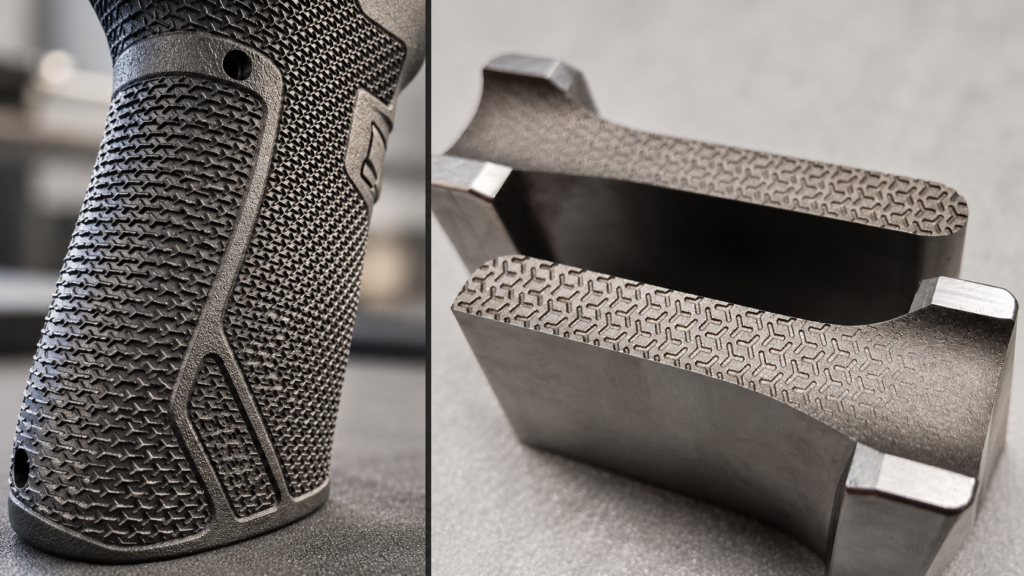
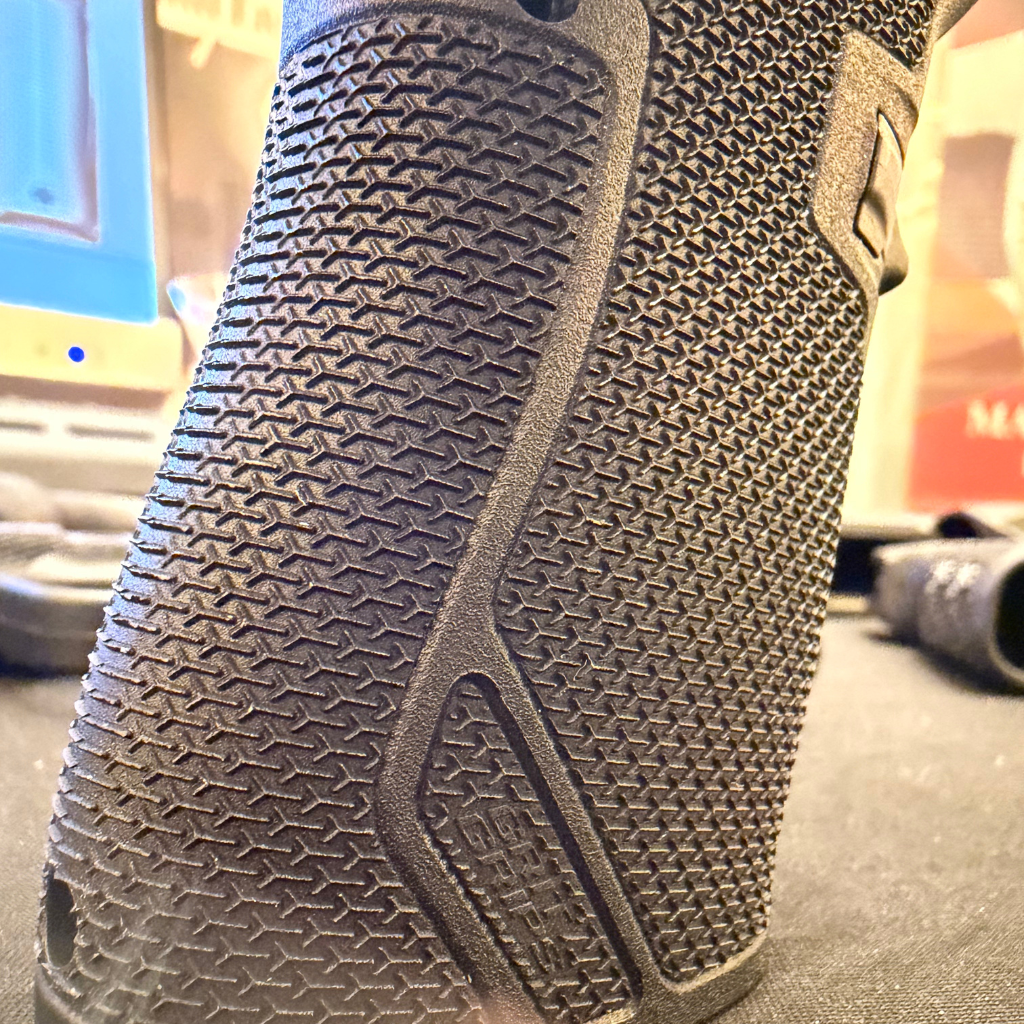
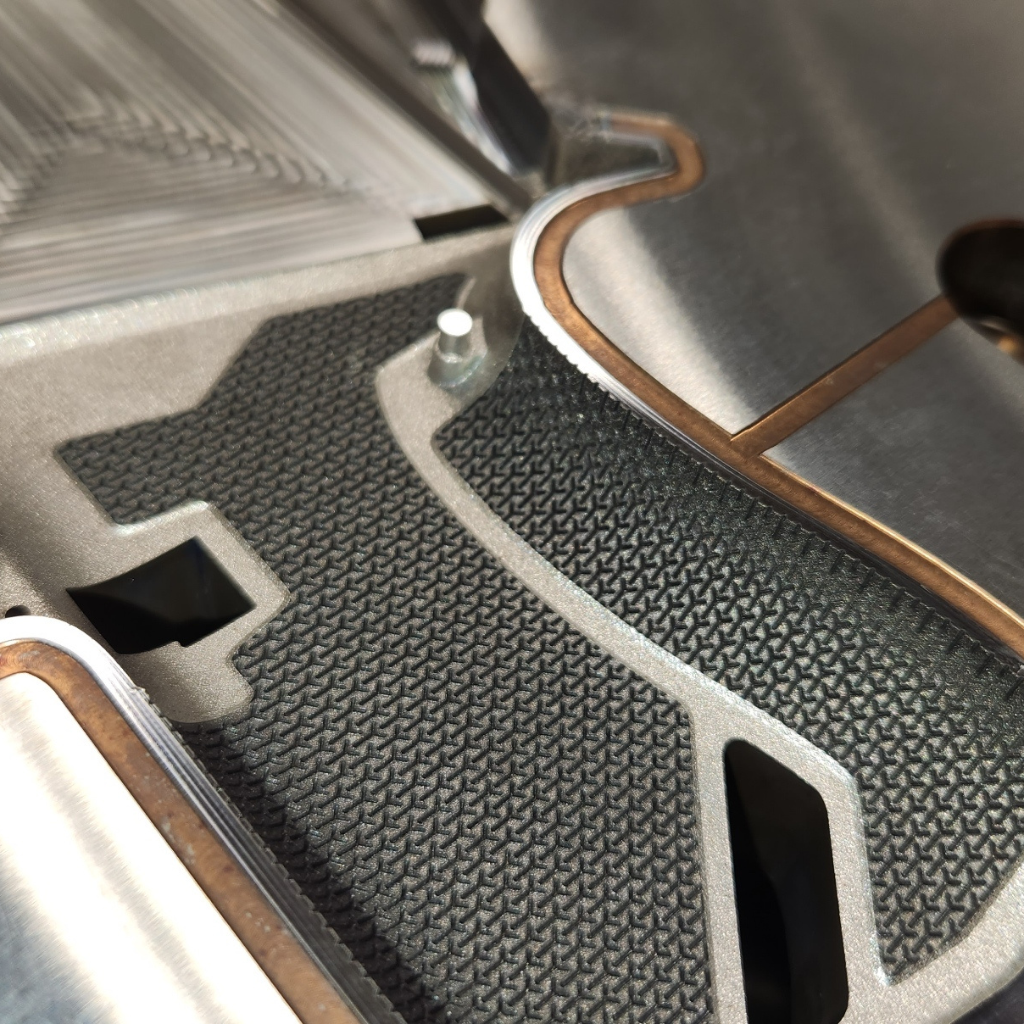
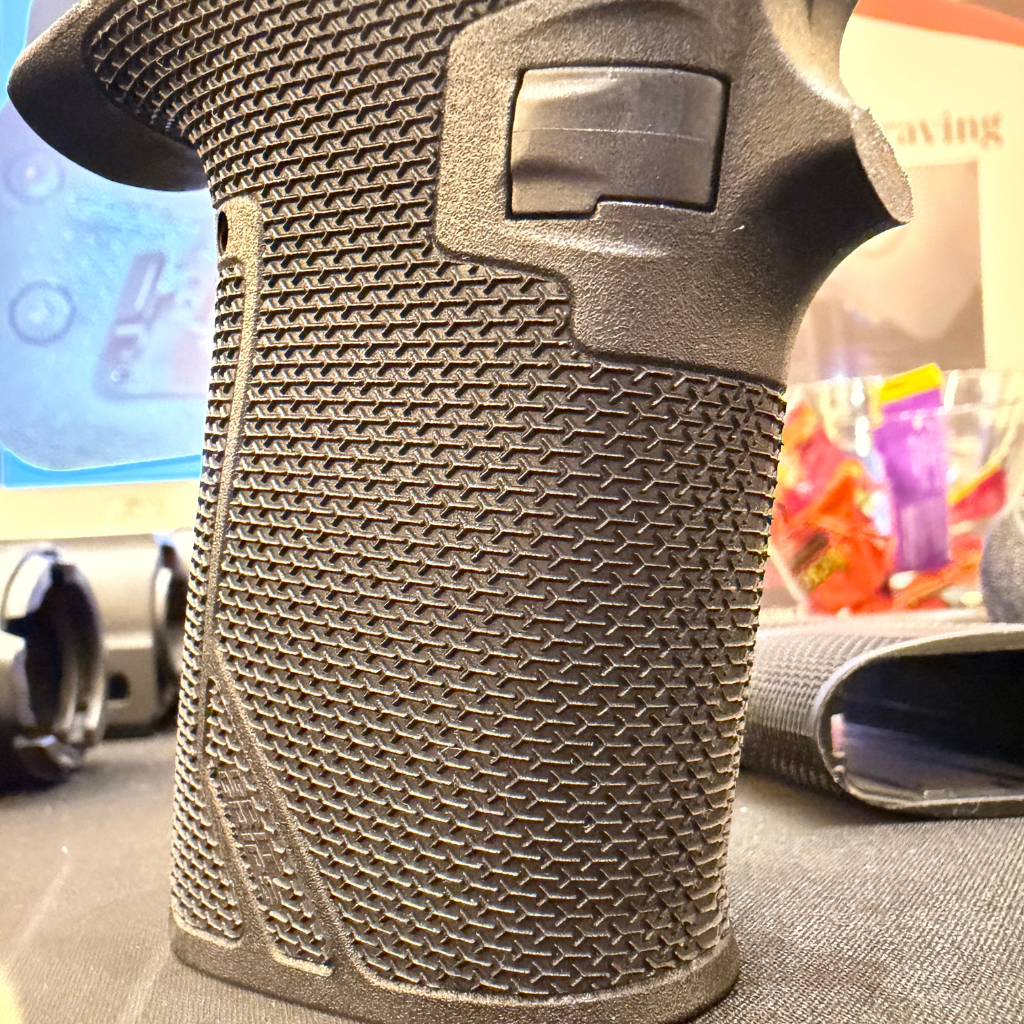
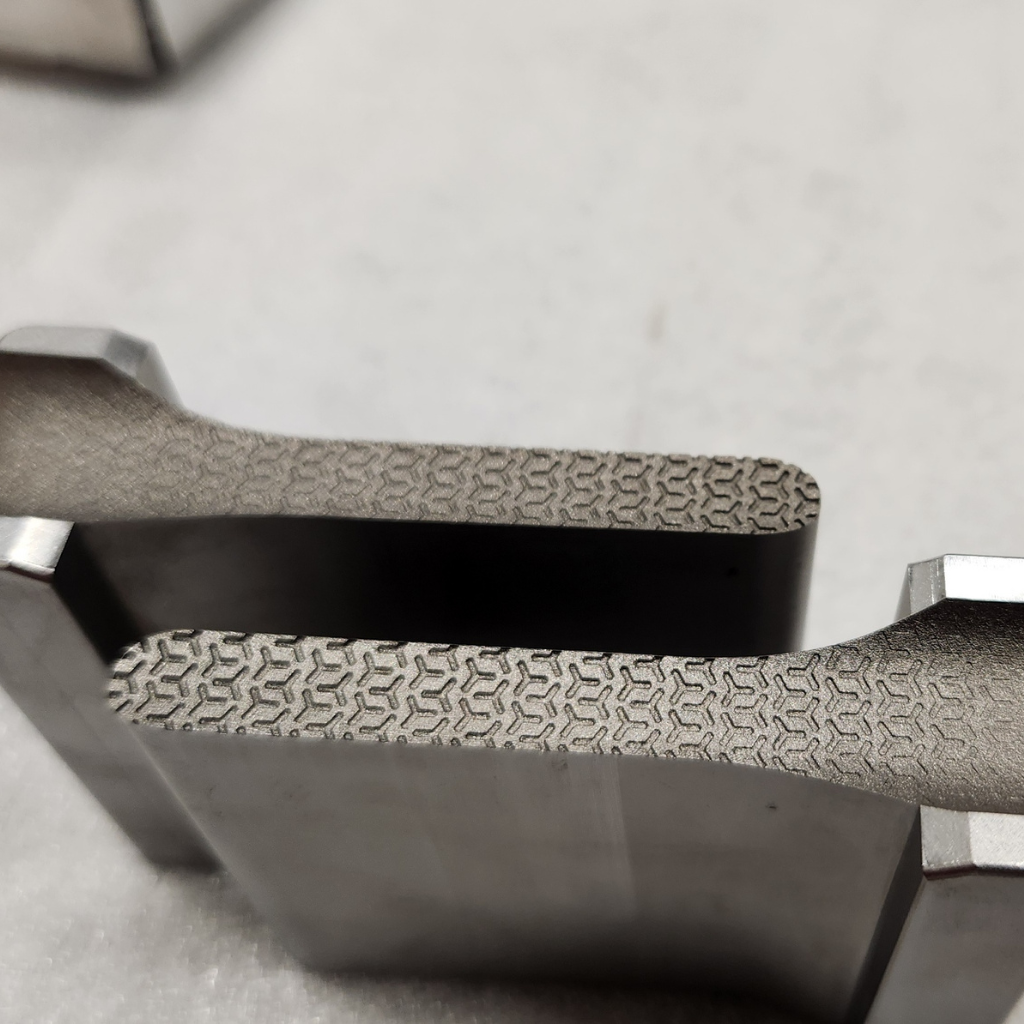
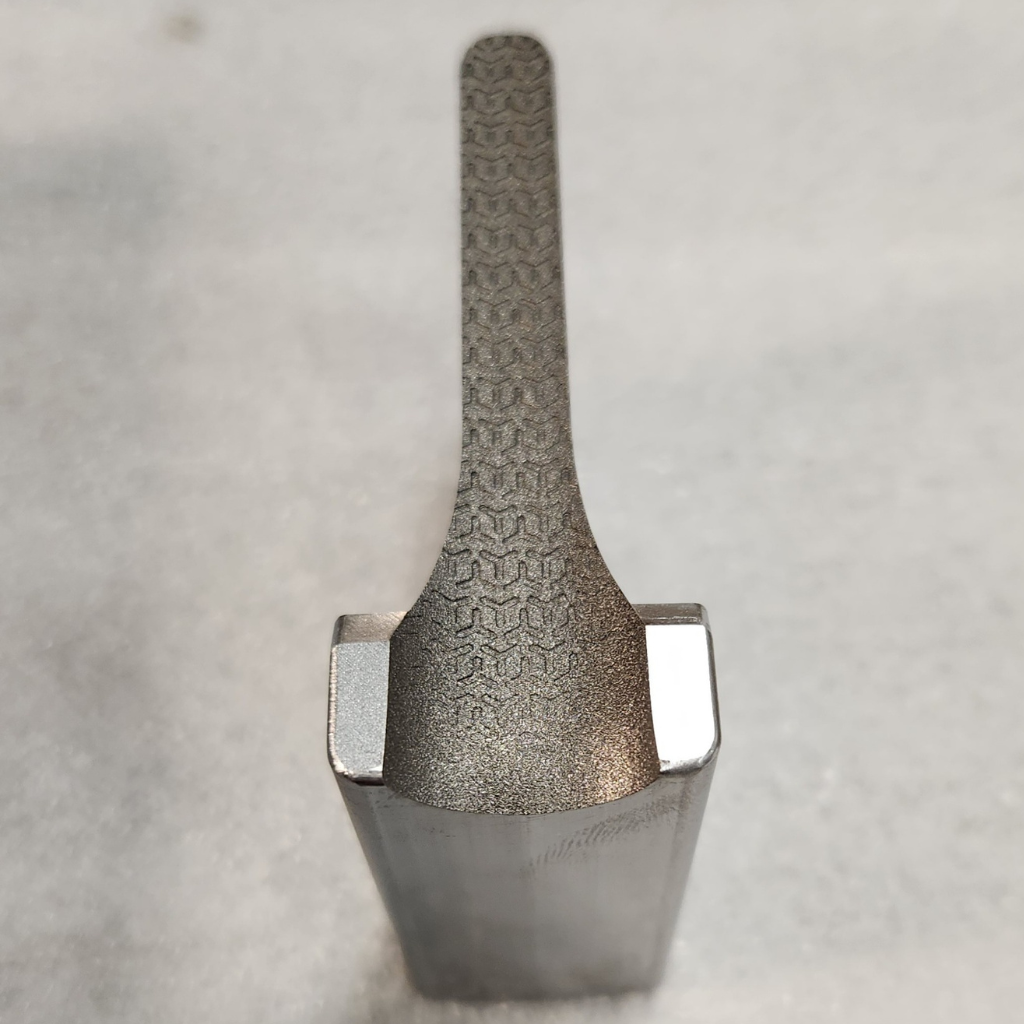
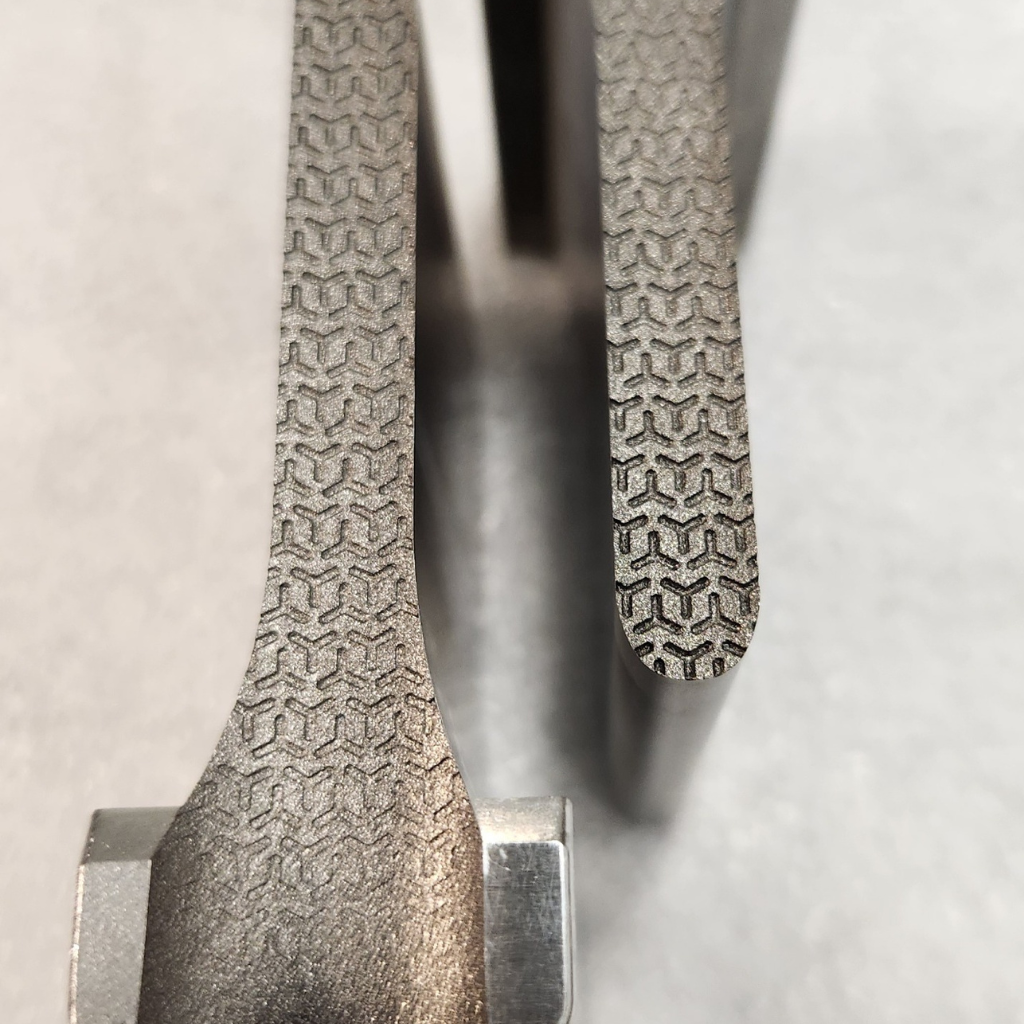
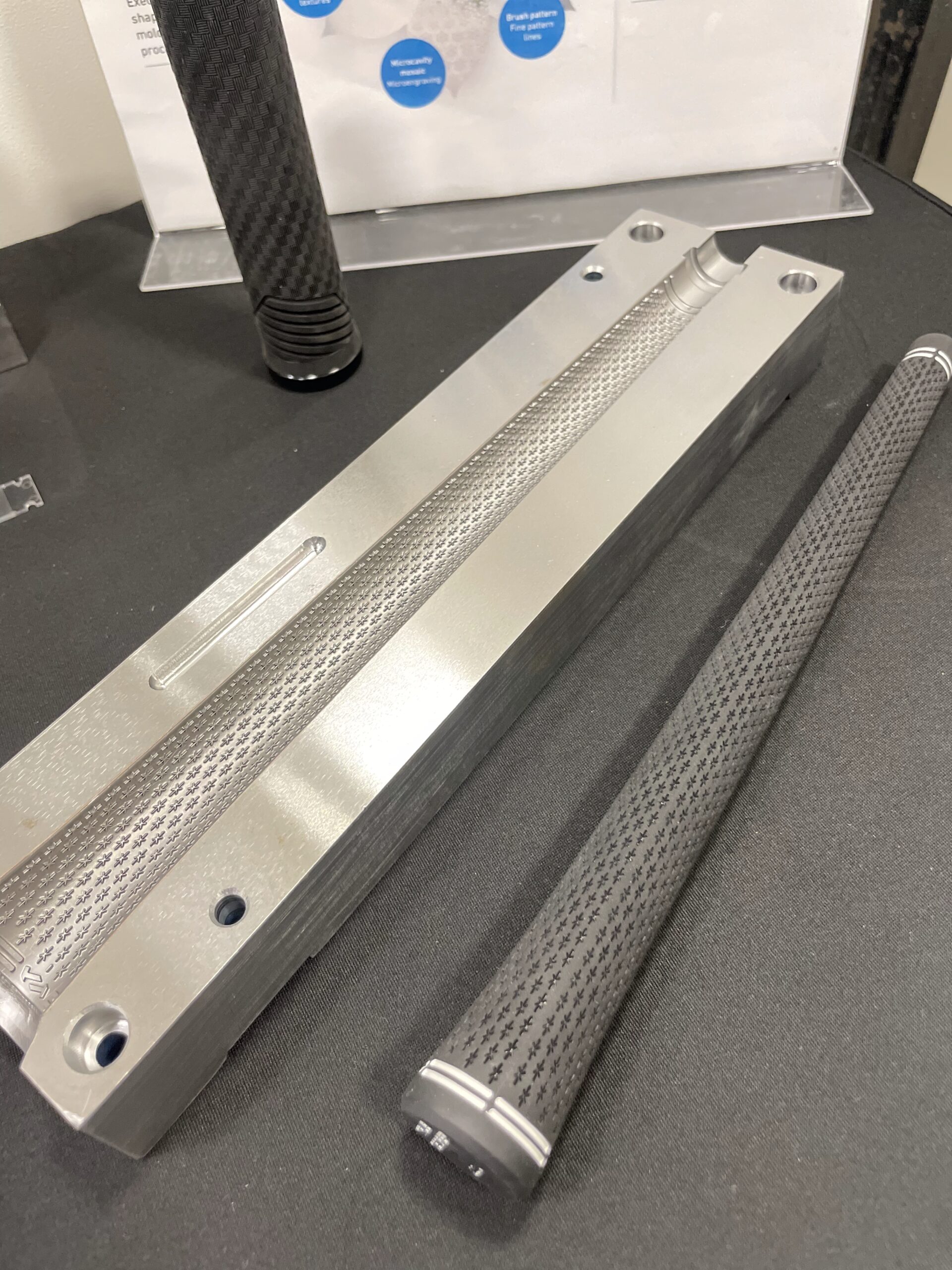
Firearm grip texture beside mold tooling showing a gradual texture fade.

A texture reference can show the intended appearance of a surface. It may leave a critical design decision unresolved: where should that texture change, and what should the transition look like?

For engineers and tooling teams, the boundary between two surface treatments deserves its own specification. A textured panel meeting a smooth border, a pattern wrapping around a curved face, and a gradual fade each communicate a different intent.

St. Paul Engraving works with customers to review surface requirements and evaluate a proposed laser texturing approach. A productive discussion starts with the intended result, the actual geometry, and a shared reference for review.

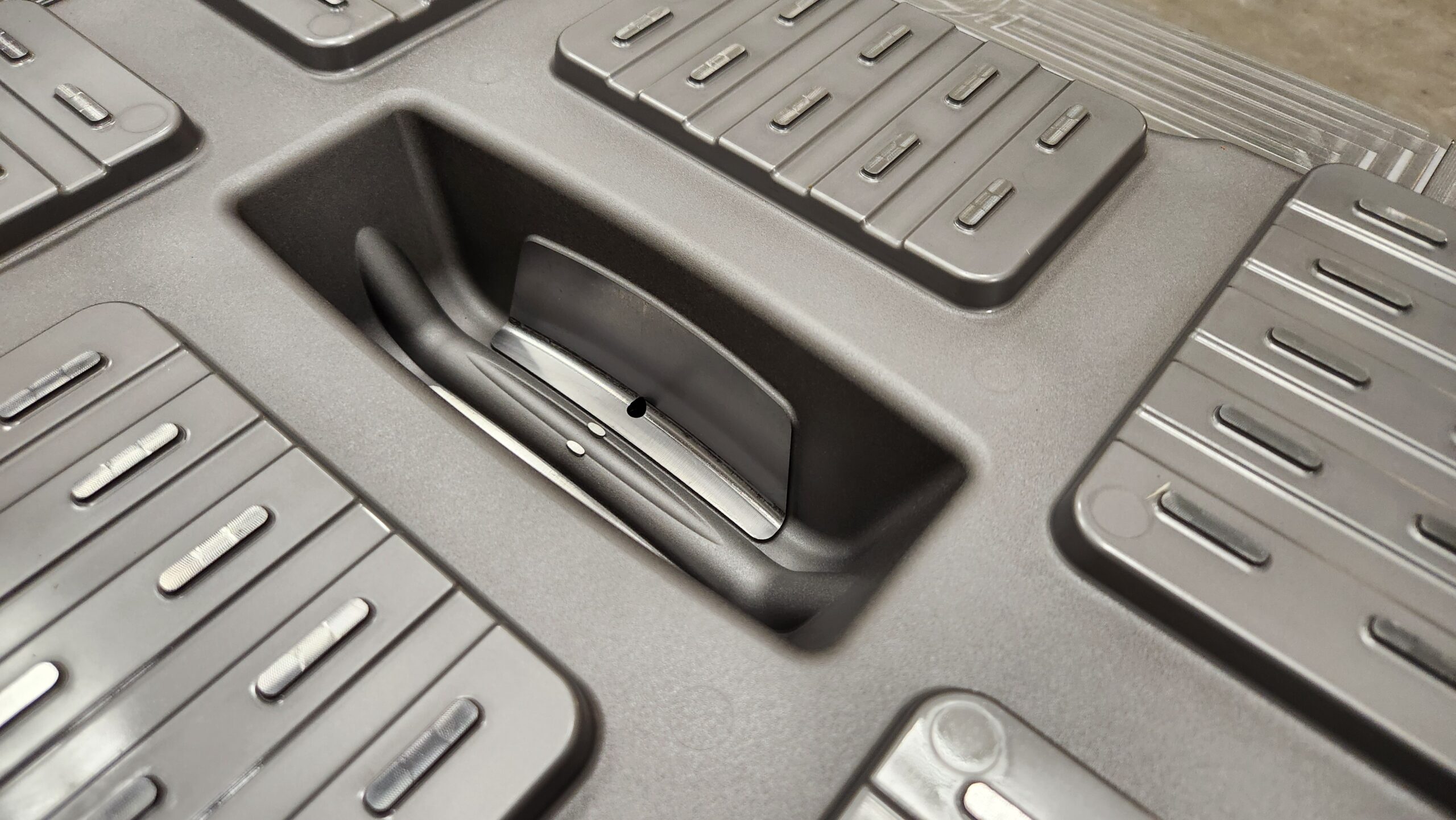
The firearm application examples featured here show two distinct faded texture treatments: a grip with a blended backstrap and another component from the same firearm with a faded aggressive texture. An accompanying video demonstrates how the texture meets across two separate parts when they are brought together. Each example highlights a different question to resolve before production.

Example 1: A blended backstrap
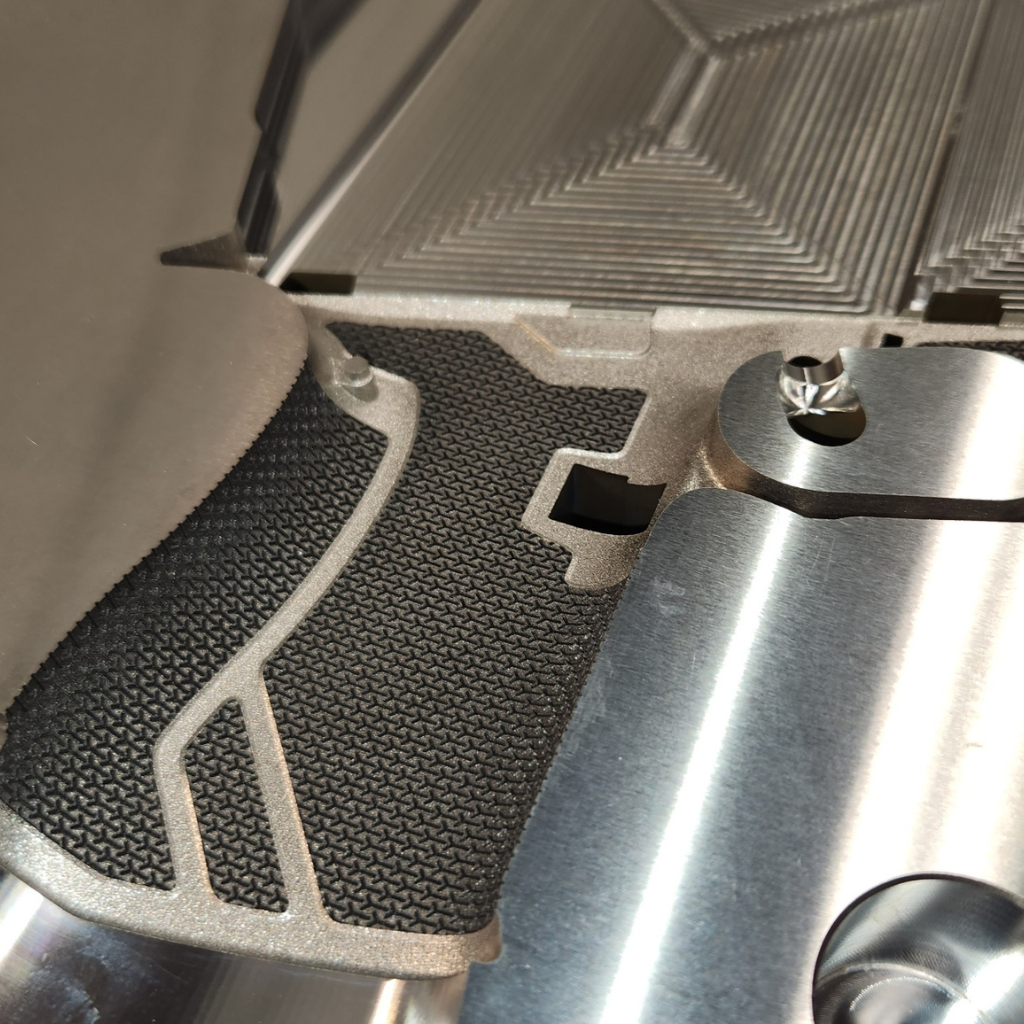
On the firearm grip, the backstrap features a blended, faded texture transition. The relevant design decision extends beyond choosing the pattern: the fade itself is part of the intended surface.

For a project with this type of transition, identify where the full pattern should begin to change, where the fade should finish, and how it should relate to the surrounding textured areas. Include views that show the transition around the curved surface, rather than relying on a single flat view.

An approved reference helps SPE and the customer discuss the intended character of the blend. If tactile characteristics are part of the requirement, include them in the review criteria alongside appearance.

Example 2: A faded aggressive texture on another component
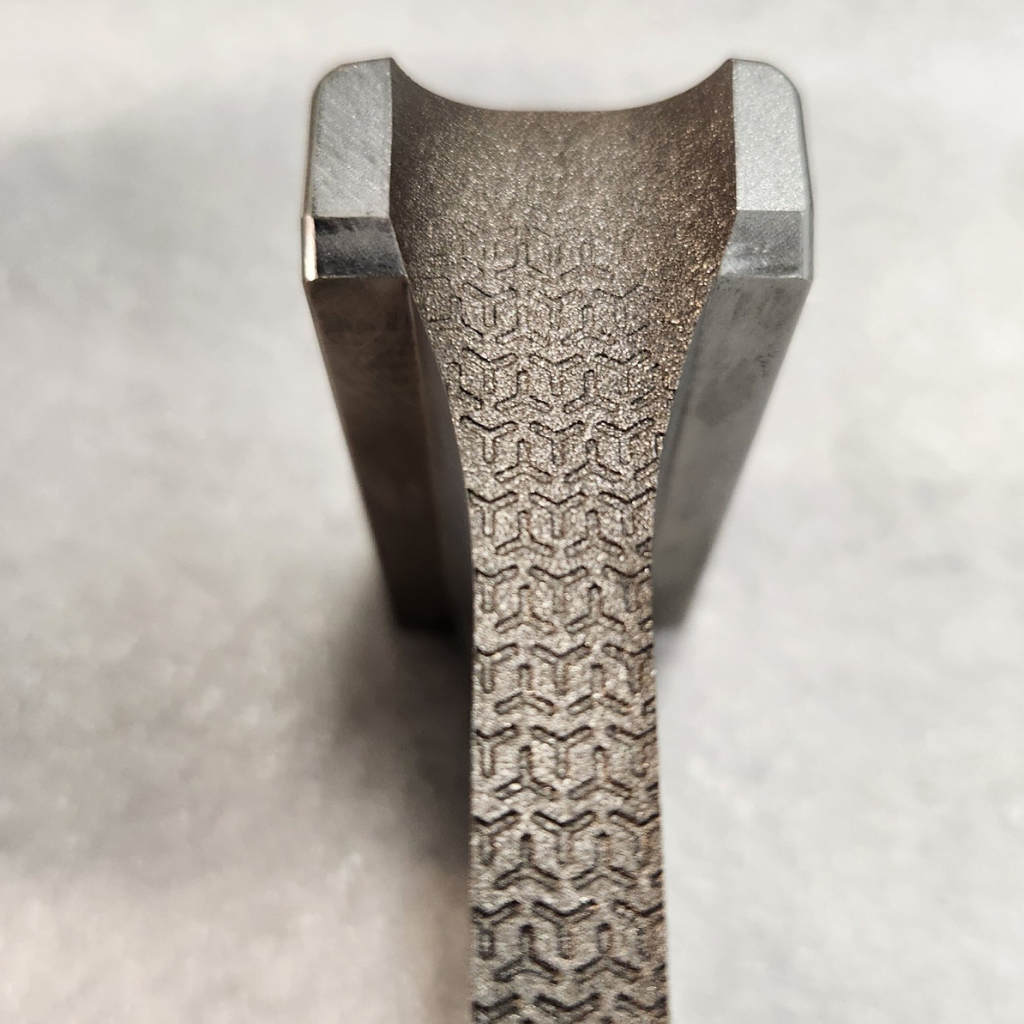
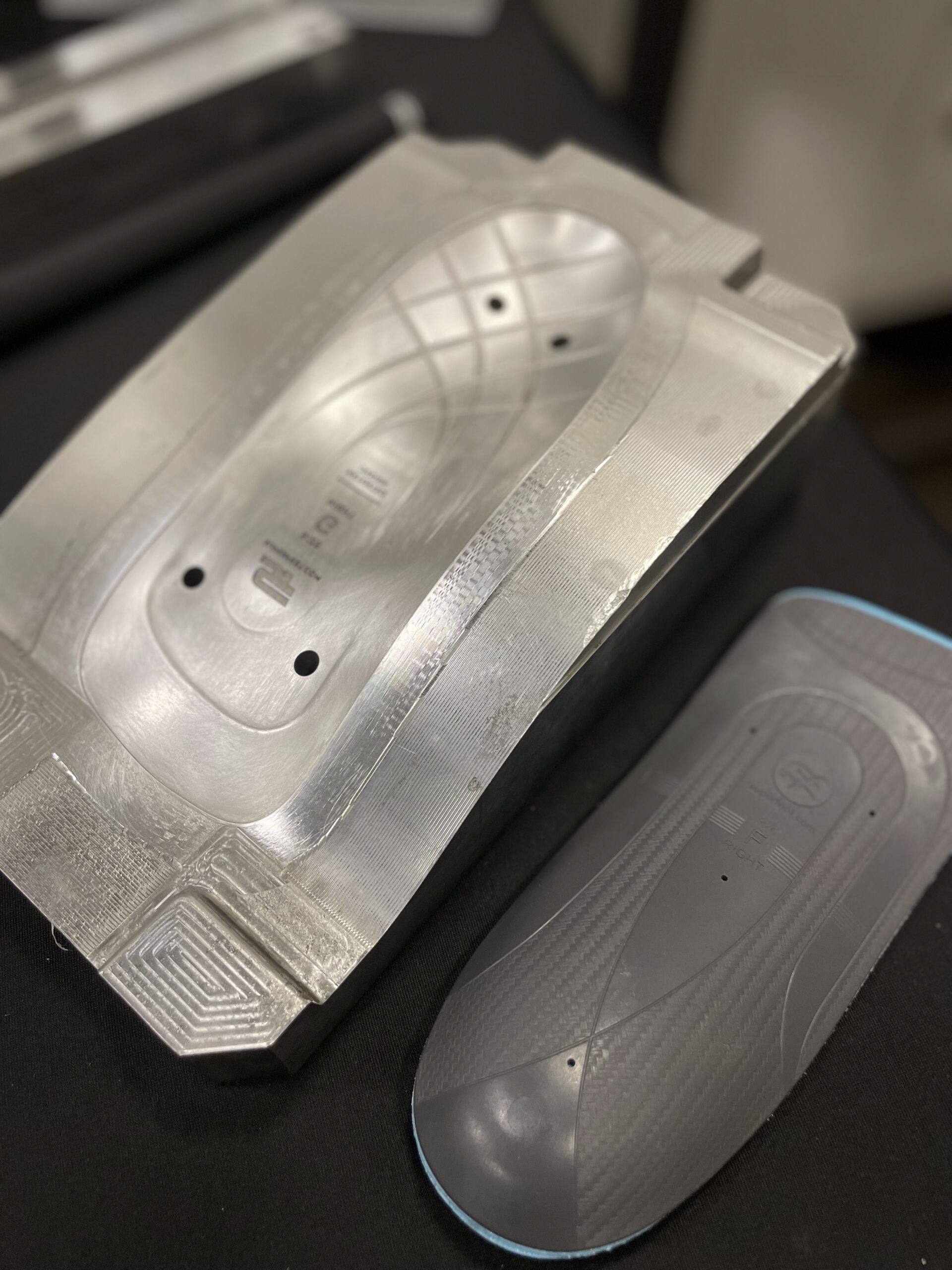
A second component from the same firearm uses another faded aggressive texture treatment. This example brings the fade into focus on a different geometry.

Using the same general texture concept across a product does not fully define the treatment of each component. The fade location, direction, extent, and relationship to nearby features still need to be specified for that surface.

Review each component individually, then review how the surfaces relate within the product. Identify which characteristics should remain shared and which transitions are specific to the component.

Texture alignment across separate parts

The accompanying video shows two textured parts separated and then brought back together, demonstrating the visual continuity of the pattern at the joint.

This introduces an additional requirement: how should the texture meet when the parts are together?

For a project requiring this type of alignment, provide the assembled geometry as well as the individual part models. Identify the joint, the intended pattern direction, and the relationship between the texture features on either side. Define what will be reviewed in the assembled condition.

Here, “seamless” describes the visual matchup of the texture. The parts remain separate, and their physical joint still exists. Agreeing on that distinction makes the acceptance criteria more precise.

A video can make this relationship easier to understand than an isolated close-up. Reviewing both the separated and joined conditions shows which surfaces belong to each part and how the pattern relates across the interface.

Start with the surface intent

Before selecting a texture, define what the surface is intended to accomplish.

Is the requirement primarily visual? Does it involve a particular tactile character? Is the team matching an existing component or introducing a new pattern? If a functional benefit is intended, identify how that benefit will be evaluated.

Separate the desired appearance from any performance requirement. A photograph can communicate design intent, but it cannot establish how a finished part will perform.

Describe the transition as clearly as the adjoining surfaces. “Fade here” leaves room for interpretation. A more useful request identifies the start and end regions, the direction of the fade, and the reference that defines its appearance.

Locate the transition on the geometry

Mark the treatment areas on the drawing or CAD model. Identify where each texture begins and ends, as well as any areas that must remain untreated.

Useful questions include:

  • Does the boundary follow an edge, feature, or defined line?
  • Should the texture stop before a radius or continue across it?
  • Is the change abrupt or gradual?
  • How should the pattern behave around corners?
  • Which adjoining surfaces will be visible together on the finished product?

For example, a request for a textured panel surrounded by a smooth border should identify both the pattern and the border limits. If the panel curves into a sidewall, the model should show whether the texture continues onto that wall.

This is a planning example, not a specification for every mold. The appropriate boundary depends on the project’s design intent and geometry.

Review access and part orientation

A boundary that looks straightforward in one drawing view may be harder to interpret on a recessed or curved surface.

Include the surrounding geometry in the review. Surface direction, adjacent features, and the proposed setup all belong in the discussion of how the required areas will be accessed.

SPE’s 5-axis laser capability brings part orientation into that evaluation. Suitability still needs to be assessed for the actual tool and surface requirements.

Share the CAD model where available, along with annotated views that make the intended treatment areas clear. Identify any setup restrictions or features that must be protected.

Provide material and manufacturing context

The project information should distinguish between the tool being treated and the part it will produce.

Provide the tool material, its current surface condition, and any known coatings, repairs, or previous treatments. Include the intended molding material and relevant manufacturing requirements for SPE to consider with your team.

If the proposed transition crosses a repaired area or an existing texture, flag that location early. It is a detail to review before agreeing on the approach.

If release, material flow, or another production concern informs the texture choice, describe the requirement and the planned evaluation. Keep those expectations explicit rather than assuming the pattern alone establishes the outcome.

Choose a reference everyone can use

Agree on which reference defines the intended result: an approved physical sample, texture file, drawing revision, or combination of these.

A reference image can communicate the overall look while leaving scale, coverage, and tactile expectations unresolved. Record what each reference is intended to define.

For a transition, clarify:

  • The texture on each side of the boundary
  • Pattern scale and direction
  • The extent of any fade region
  • The relationship to adjacent untreated surfaces
  • The revision that applies to the project

When matching an existing surface, identify the specific area that serves as the reference. If several samples differ, choose the governing sample before work begins.

Agree on review expectations

Define how the surface and its transition will be reviewed before production work begins.

Who will approve the result? What sample, image, or measurement will be used? Which criteria are visual, and which require another form of evaluation?

For visual review, agree on the viewing conditions and reference. If measured criteria are required, identify them with SPE rather than relying on terms such as “consistent” or “close match.”

Also establish how changes will be documented. A revised boundary or texture file should be tied to the applicable drawing, tool, or cavity so the team can identify which version governs the work.

Prepare for a focused project discussion

A useful starting package includes:

  • A drawing or CAD model with treatment areas marked
  • Tool material and current surface condition
  • Intended molding material and manufacturing context
  • Approved texture references
  • Transition locations and untreated areas
  • Review criteria, revision information, and project timing

You do not need every decision finalized before contacting SPE. Identify the requirements that are established and the questions that remain open. That gives both teams a clearer basis for reviewing feasibility and the intended result.

Have a defined mold texture or surface transition challenge? Share your drawing, material information, and references with St. Paul Engraving for review.

Contact St. Paul Engraving

St. Paul Engraving
6150 Field Stone Court
Stacy, MN 55079
Phone: (651) 462 – 9356
Email: info@stpaulengraving.com
Request a Quote
Choosing the Right Surface Texturing Process: What Injection Molding Engineers Should Consider

St. Paul Engraving article cover showing a textured injection mold surface with engineering graphics and key process-selection factors including material, geometry, repeatability, and surface performance.

In This Article


Surface texture can influence much more than the appearance of an injection-molded part.

Depending on the application, texture may contribute to grip, release, light behavior, gloss control, cosmetic appearance, product differentiation, or other functional surface characteristics. That means choosing a surface texturing process should not begin with a preferred machine or manufacturing method.

It should begin with the application.

For injection molding engineers, mold engineers, and tooling teams, the better question is rarely, “Which texturing technology is best?”

The more useful question is:

Which process best fits the surface requirement, mold geometry, material, production needs, and intended result?

That distinction matters because no two surface applications are exactly alike.

Start With What the Surface Needs to Accomplish

Before evaluating how a texture will be produced, define what the finished surface needs to do.

Some applications are driven primarily by appearance. Others require a specific tactile characteristic, functional surface behavior, or relationship between multiple surface finishes on the same molded part.

A texture may need to support:

  • Cosmetic appearance or brand identity
  • Grip or tactile feel
  • Mold release
  • Gloss control or light behavior
  • Functional surface performance
  • Differentiation between adjacent areas of a part

Those requirements should guide the manufacturing conversation from the beginning.

A surface that looks correct but does not support the intended application is not necessarily the right result.

The more clearly the desired outcome is defined, the easier it becomes to evaluate which texturing approach can support it.

Geometry Is Part of the Texture Specification

A texture cannot be evaluated independently from the geometry it must cover.

Tight radii, deep cavities, curved surfaces, transitions, cylindrical features, and other complex geometries can influence how a pattern is applied and how consistently it can be carried across the mold.

This is especially important when a texture must remain visually or functionally consistent as the surface changes direction.

St. Paul Engraving works with complex mold and tooling geometries using both traditional process knowledge and advanced 5-axis laser texturing technology. SPE’s laser workflow incorporates mold design data, surface meshing, pattern application, renderings, and multi-axis processing to support demanding geometry and controlled pattern placement.

The engineering takeaway is straightforward:

Evaluate the geometry before committing to the process.

That discussion is much easier to have while the application is still being defined than after the tooling and surface specification have already been finalized.

For engineers dealing with particularly demanding surfaces, SPE has also explored these considerations in more detail in its resource on complex mold texturing challenges.

Material Can Influence the Process Decision

The material being textured is another part of the application picture.

SPE’s process-selection approach considers geometry, material, production requirements, and the end-use goal together when determining an appropriate texture and execution strategy.

That does not mean one material automatically dictates one texturing method.

Instead, material should be part of the technical conversation alongside the surface condition, mold design, desired pattern, tooling requirements, and intended result.

This is one reason it is valuable to involve the texture supplier earlier in the project. Material decisions that appear separate from surface finishing can ultimately influence which manufacturing options are practical for the application.

Think Beyond the Pattern Name

Specifying a texture is not always as simple as selecting a pattern from a reference.

Some projects call for an established industry texture. Others require an existing surface to be replicated, a damaged texture to be restored, or a custom pattern to be developed for a new product.

Pattern scale, placement, orientation, transitions, and the way the texture interacts with the surrounding geometry can all become part of the manufacturing requirement.

Digital workflows can provide additional control for applications requiring pattern development, rendering, review, and repeatable execution. SPE uses digital processes alongside advanced laser systems and experienced craftsmanship to support controlled surface results. Its laser process, for example, can include digital surface preparation and rendered previews before production begins.

The important point is that the pattern and the process should be evaluated together.

A design that works well on a simple surface may create different considerations when transferred to complex mold geometry.

Repeatability Matters Beyond the First Tool

For many injection molding programs, producing the first acceptable surface is only part of the requirement.

Engineers may also need to consider what happens across multiple cavities, additional tools, future production runs, repairs, or texture restoration later in the tooling lifecycle.

Consistency can therefore become a process-selection consideration from the beginning.

SPE’s digital laser workflows, automation, and repeatable fixturing are designed to support controlled surface results across demanding production applications.

For engineering teams, this means asking questions beyond, “Can this texture be produced?”

It may also be worth asking:

Can the result be reproduced when the program needs it again?

That becomes increasingly important when multiple tools, cavities, or long-term tooling support are involved.

Laser and Chemical Texturing Both Have a Place

It can be tempting to frame process selection as a competition between technologies.

That is not how SPE approaches the decision.

St. Paul Engraving provides both 5-axis laser texturing and chemical texturing for injection molds and other manufacturing applications. Its chemical-texturing capabilities include replication of established patterns as well as custom specialty patterns across multiple mold materials.

Laser texturing can offer advantages where digital process control, controlled pattern placement, repeatability, or complex geometry are important considerations.

Chemical texturing remains another established surface-manufacturing option within SPE’s capabilities.

The right choice depends on the actual mold, surface requirement, material, geometry, production needs, and desired end result—not simply which technology is newer.

That distinction is important for engineers evaluating a project.

Technology should support the application. The application should not be forced to fit the technology.

Tool Condition and Production Requirements Matter Too

Process selection does not happen in a vacuum.

The condition of the tooling, how the mold will be handled, the production environment, existing finishes, future repair requirements, and the broader tooling lifecycle can all influence how a surface project should be approached.

For example, proper surface preparation may involve mold polishing to address EDM, tooling marks, or other defects and establish the appropriate finish for the texturing procedure.

Future service requirements matter as well. SPE’s mold repair and texture restoration capabilities are designed to address damaged patterns, texture wear, weld-related repairs, gloss issues, and other tooling conditions that may arise later in the mold’s life.

For engineers and tooling teams, considering those needs earlier can reduce the number of isolated decisions being made downstream.

Why Earlier Collaboration Helps

Many surface-related challenges become harder to solve once every other manufacturing decision has already been locked in.

By involving a surface-engineering partner earlier, engineering teams have more opportunity to evaluate the interaction between the surface goal, material, geometry, pattern, repeatability requirements, and available processes.

That does not mean the texture supplier should dictate the design.

It means the people responsible for producing the surface can contribute practical manufacturing knowledge while options are still available.

At St. Paul Engraving, that collaborative approach is central to how projects are evaluated. The goal is not to recommend laser texturing for every application or default to a particular process. It is to understand what the tool and finished part require, then determine an execution strategy that supports that requirement.

That is where process expertise becomes most useful:

Before a manufacturing choice becomes a constraint.

Select the Process Around the Complete Application

The right surface-texturing process is rarely determined by one factor.

A successful specification considers how the desired surface, mold geometry, material, pattern requirements, production environment, and repeatability expectations work together.

For injection molding engineers, that means process selection should come after the application requirements are understood—not before.

St. Paul Engraving combines traditional texturing knowledge, advanced 5-axis laser technology, digital workflows, automation, integrated tooling support, and experienced craftsmanship to help manufacturers evaluate demanding surface applications and select an appropriate path forward. SPE’s current texturing offering includes both laser and chemical processes as part of that broader application-focused approach.

Evaluating texture for an injection mold? Talk with St. Paul Engraving about your application and bring the surface requirements into the conversation early.

Design Flexibility in Manufacturing

Design Flexibility Starts with the Right Engineering Conversations
Early collaboration for better design flexibility

Product development has never been more demanding.

Engineering teams are tasked with balancing performance, functionality, manufacturability, aesthetics, timelines, and cost—all while bringing innovative products to market faster than ever before.

In this environment, design flexibility becomes a significant advantage.

Not because engineers need more options, but because understanding the full range of available technologies and manufacturing capabilities often creates opportunities that may not have been considered during initial product development.

That is where early collaboration can provide tremendous value.

Expanding What’s Possible

Many product features are influenced by decisions made long before production begins.

Surface textures can affect grip, appearance, product perception, release characteristics, and overall performance. Engraved features can support branding, traceability, and functionality. Micromachined details can introduce precision features that would be difficult to achieve through traditional methods alone.

The earlier these possibilities are evaluated, the more flexibility engineering teams have when making design decisions.

Rather than revisiting completed designs later, teams can make informed choices with a broader understanding of what modern manufacturing technologies can achieve.

Technology Continues to Expand Design Possibilities

Advancements in laser texturing, precision engraving, micromachining, automation, and tooling technologies continue to create new opportunities for product designers and engineers.

Features that may have once required design compromises can now be incorporated directly into tooling. Surface characteristics can be engineered to support both functional and aesthetic goals. Complex geometries and intricate details can often be produced with greater precision and consistency than ever before.

As these technologies evolve, the range of available design possibilities continues to expand.

The challenge is not simply understanding product requirements.

It is understanding what is now possible.

Why Early Collaboration Matters

The most valuable engineering discussions often happen before tooling is finalized.

When specialists in surface engineering, laser texturing, engraving, micromachining, and tooling technologies are included early in development conversations, engineering teams gain access to additional perspectives that can help evaluate alternative approaches, uncover new opportunities, and support project goals.

In many cases, the result is not a different product.

It is a better-informed development process.

Early collaboration allows teams to explore options, compare methods, and evaluate how different technologies may influence functionality, aesthetics, manufacturability, and long-term production efficiency.

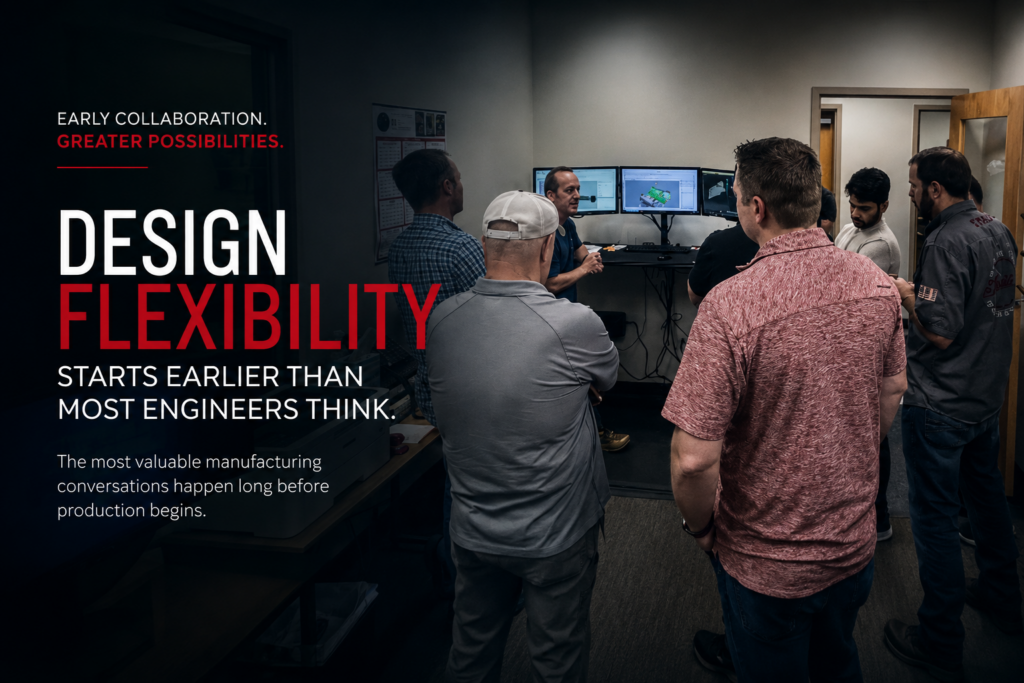
Collaborative discussion in the workshop

Designing for Performance, Appearance, and Efficiency

Successful products rarely achieve their objectives through a single design decision.

Performance, user experience, appearance, manufacturability, and production efficiency are often influenced by dozens of interconnected choices made throughout development.

Surface engineering is one example.

A texture may improve grip and user interaction. It may enhance visual appeal. It may support material release during molding. In some applications, it may contribute to product durability and overall performance.

When these considerations are evaluated early, engineering teams have greater flexibility to align design intent with manufacturing realities.

Better Products Begin with Better Conversations

The goal of early collaboration is not to change a design.

The goal is to ensure engineering teams have access to the widest possible range of solutions before critical decisions are finalized.

As manufacturing technologies continue to evolve, so do the opportunities available to product developers, tooling engineers, and manufacturers.

By bringing specialists into the conversation early, organizations can evaluate more possibilities, make more informed decisions, and unlock opportunities that may otherwise remain unexplored.

Sometimes the greatest advantage is not changing the design.

It’s knowing what is possible before the design is finalized.

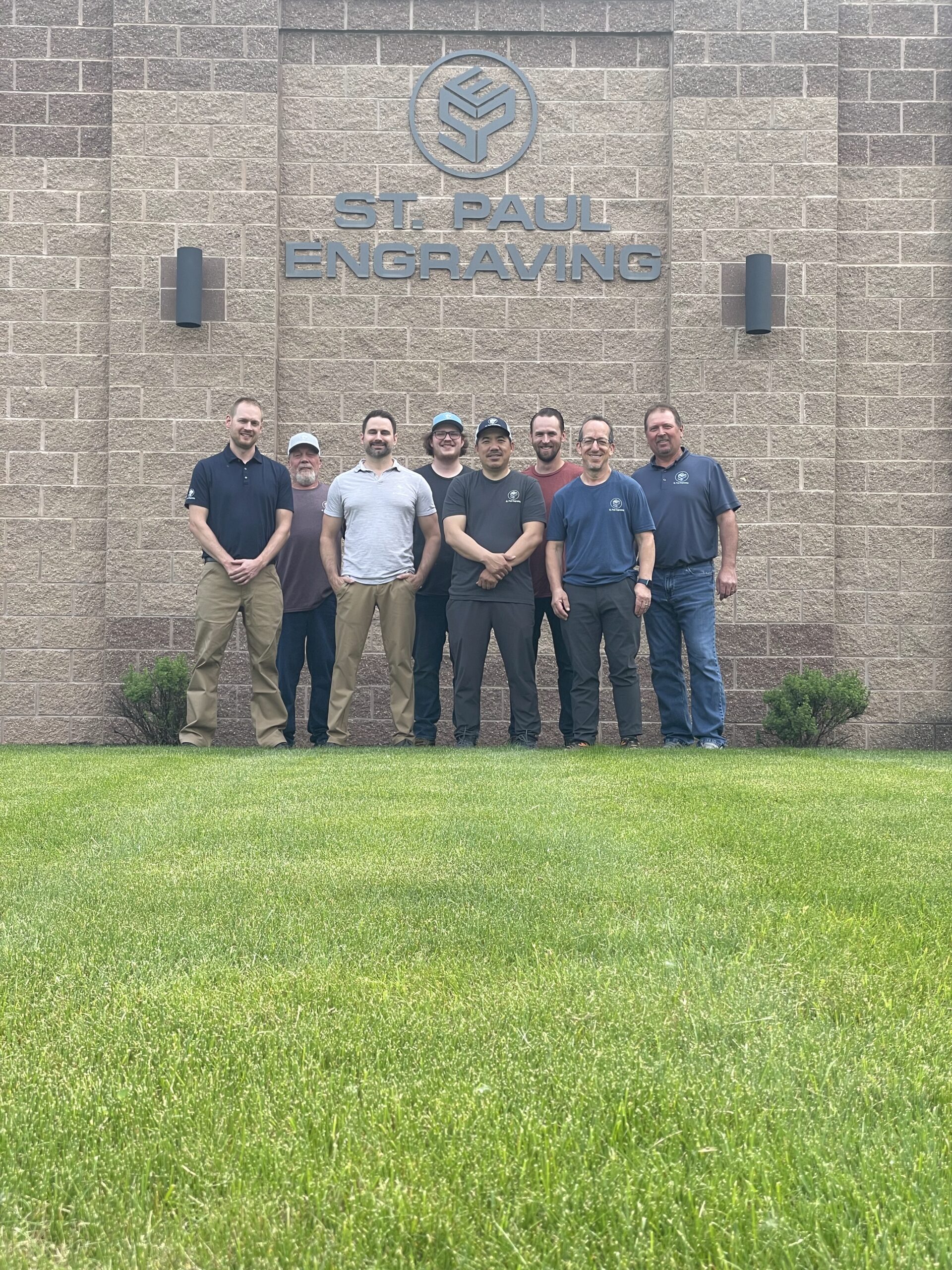
50th Anniversary Shop Open House Recap

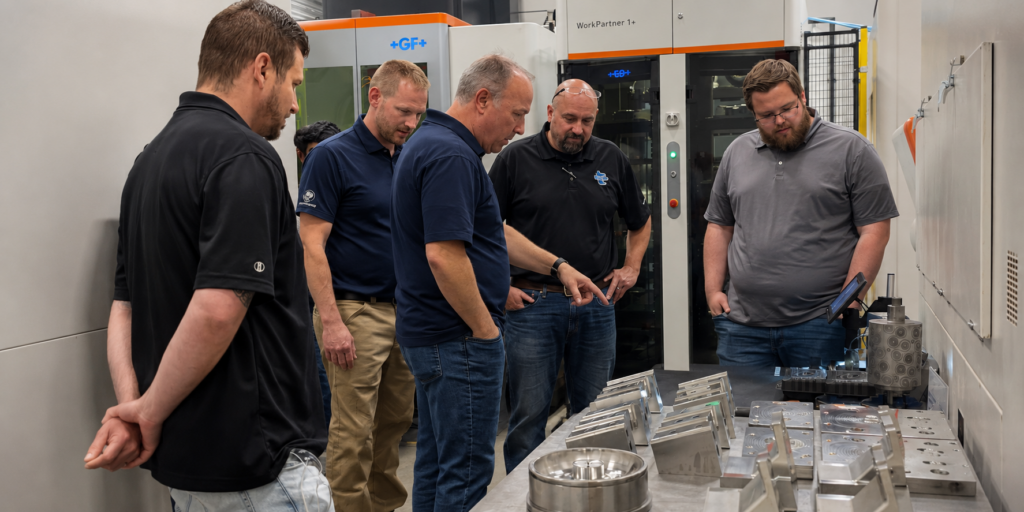
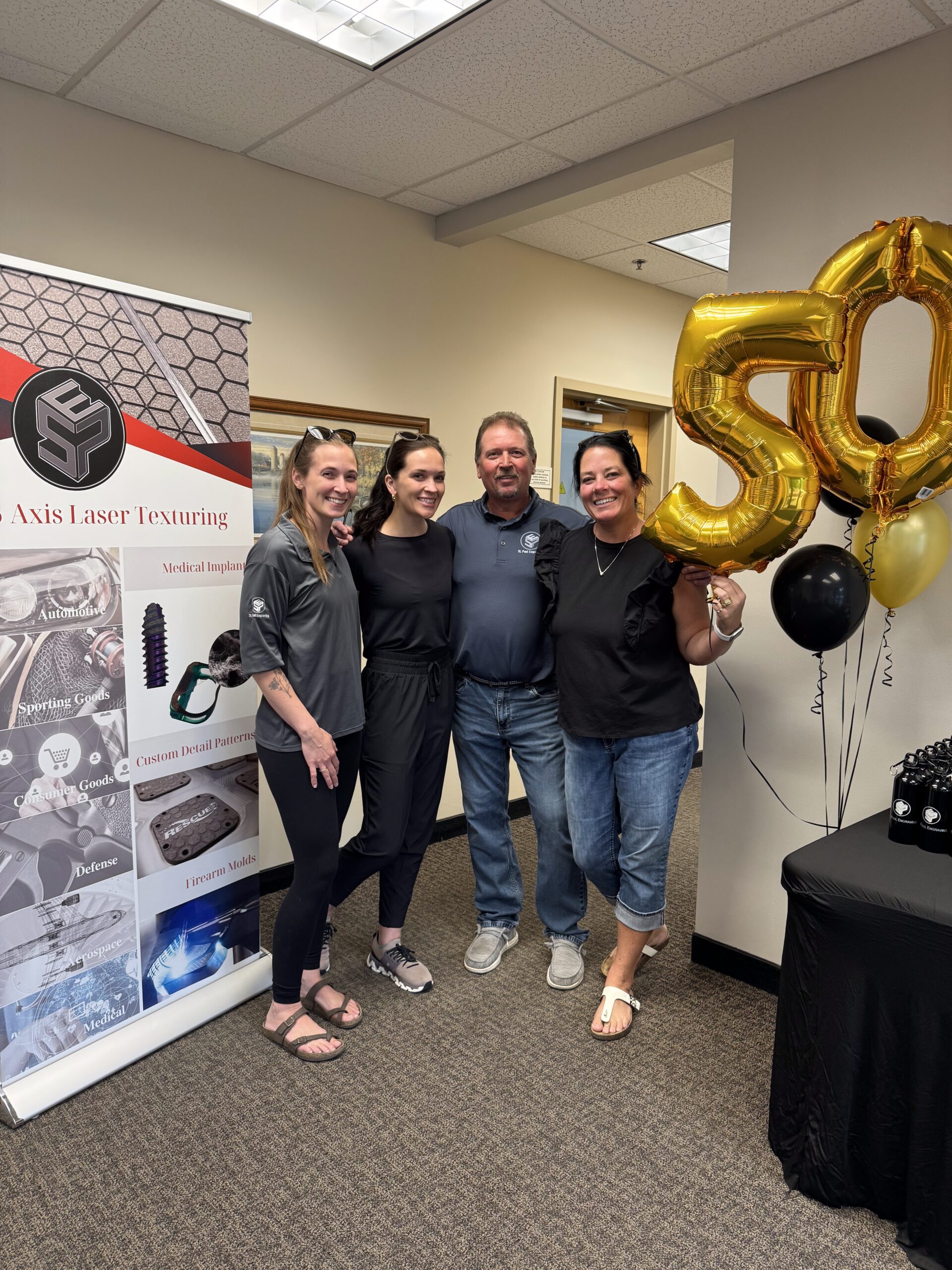
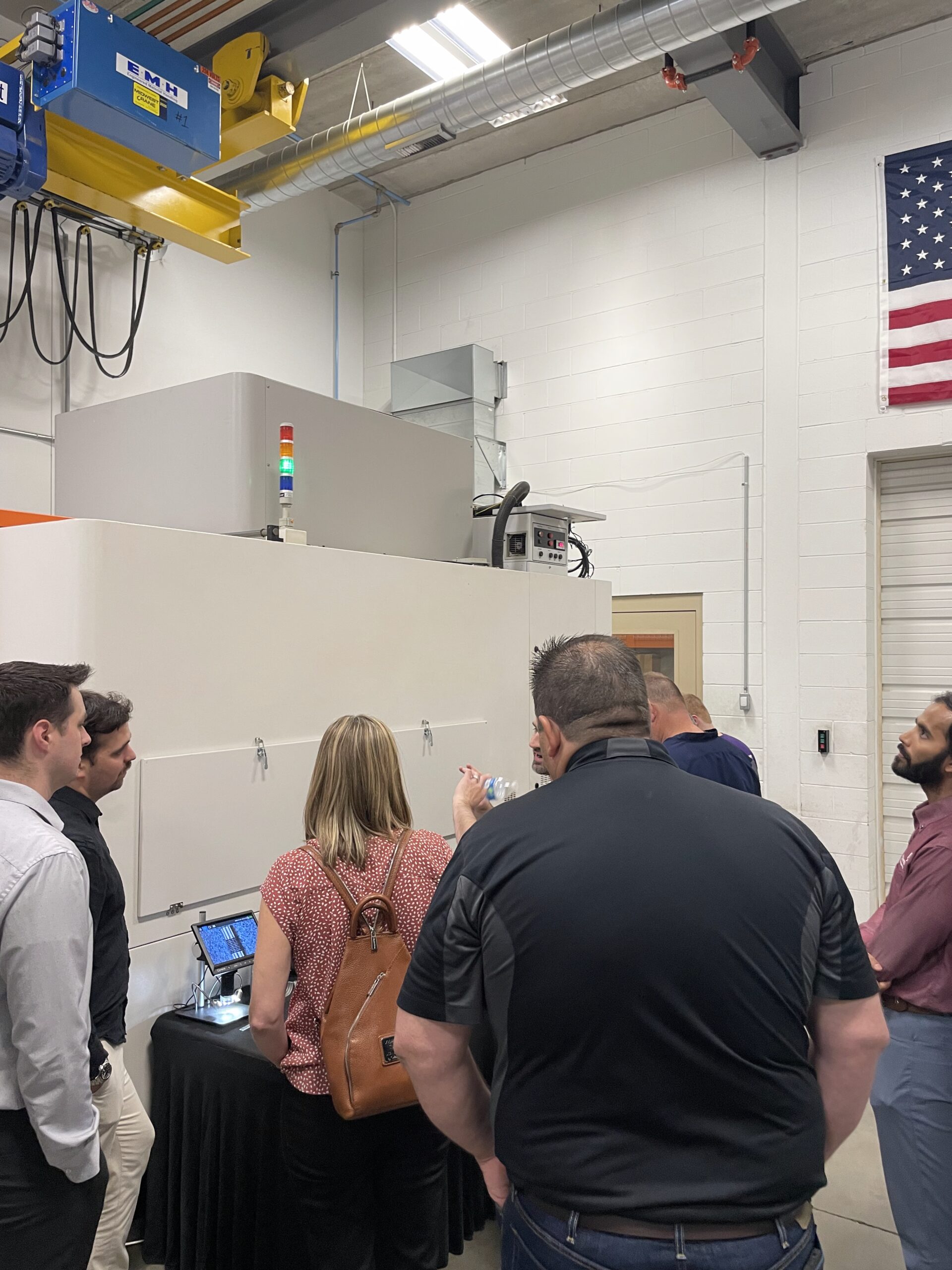
Last Wednesday, June 11, we celebrated a major milestone—the 50th Anniversary of St. Paul Engraving—with a memorable Shop Open House, and it was nothing short of a success. Nearly 100 guests—from longtime partners to industry newcomers—took time out of their demanding work week to join us. To each and every one of you: thank you. Your engagement and enthusiasm made our day truly special, and we greatly appreciate your time and interest.

Highlights from the Day

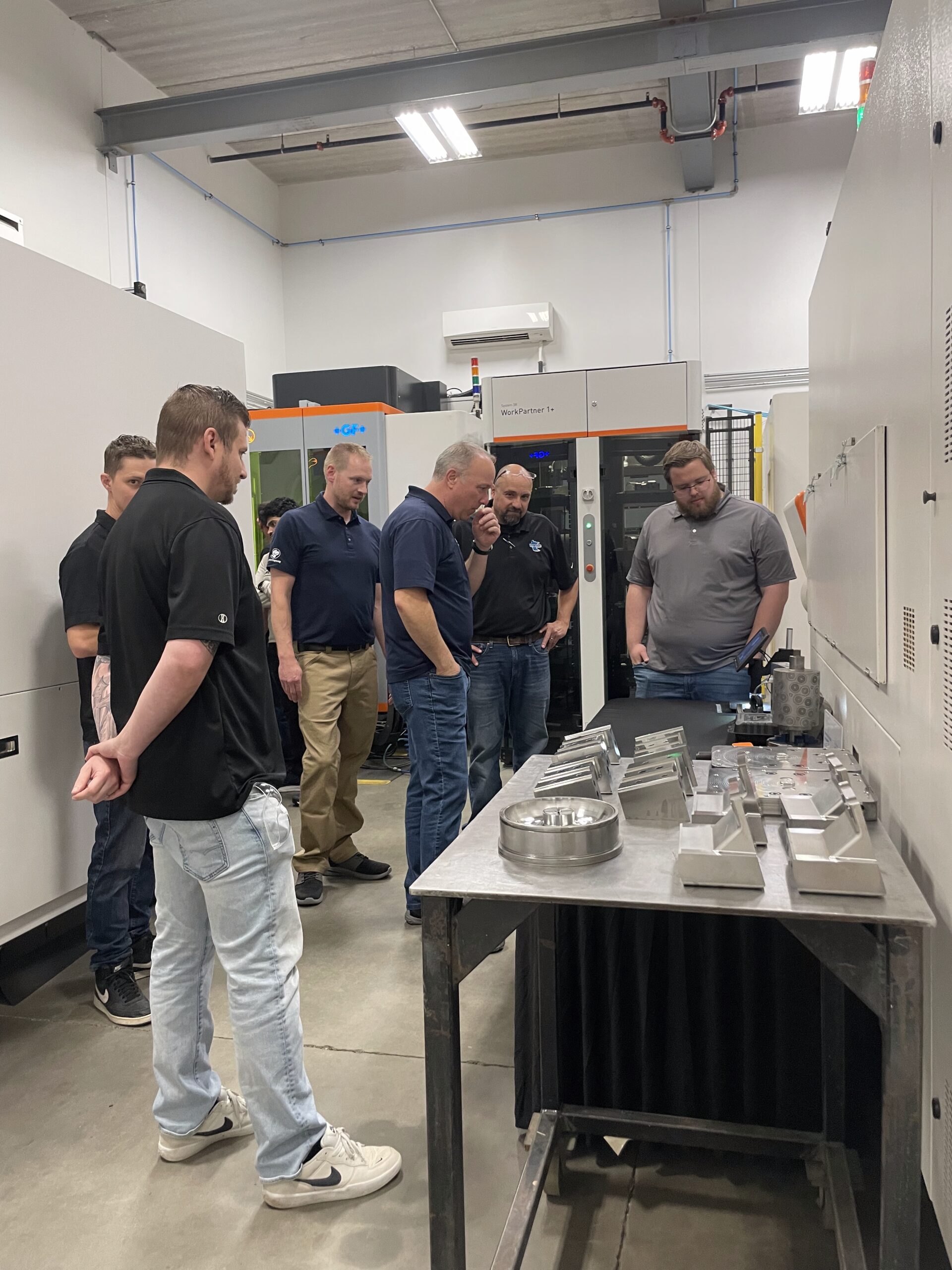
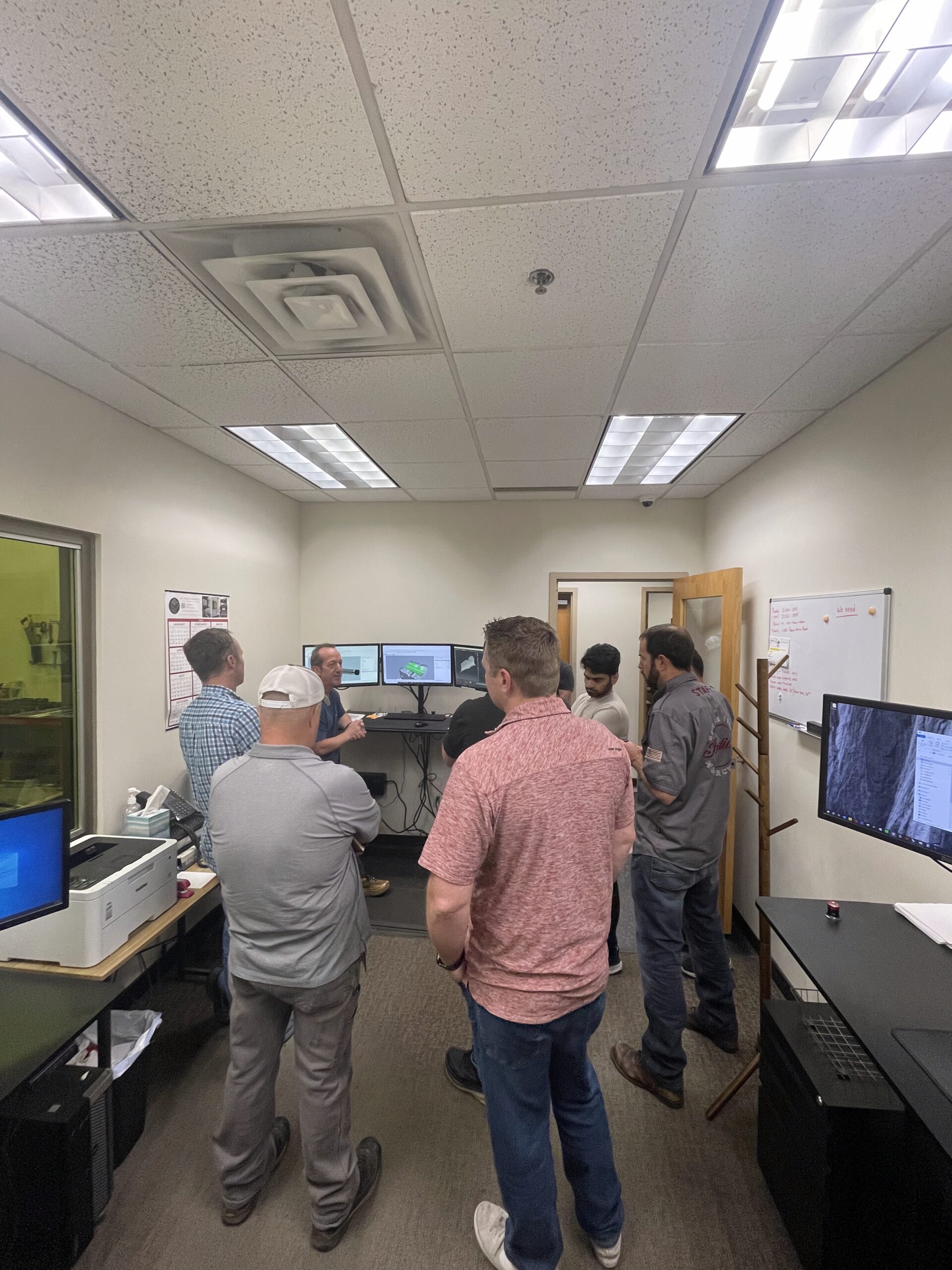
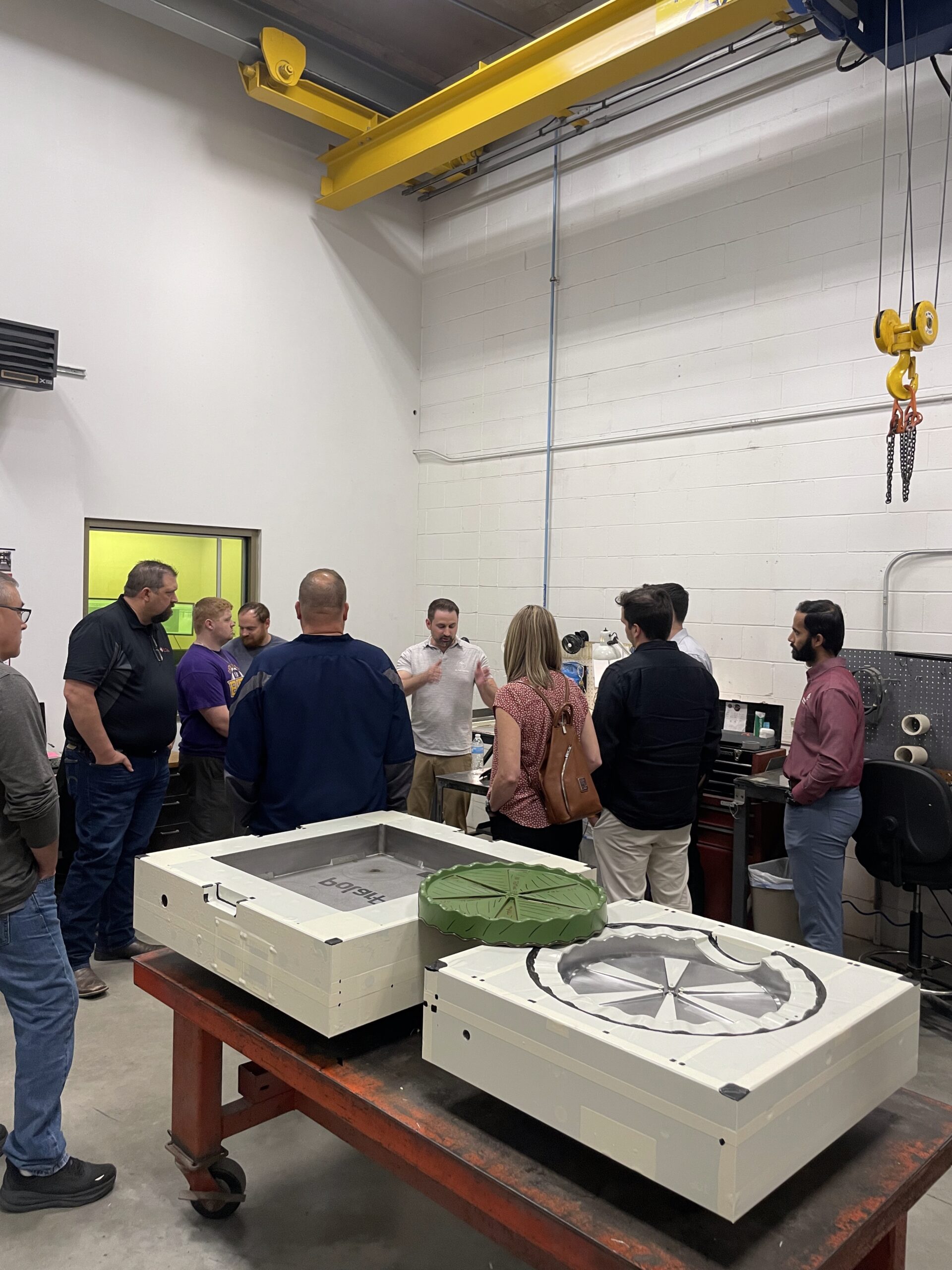
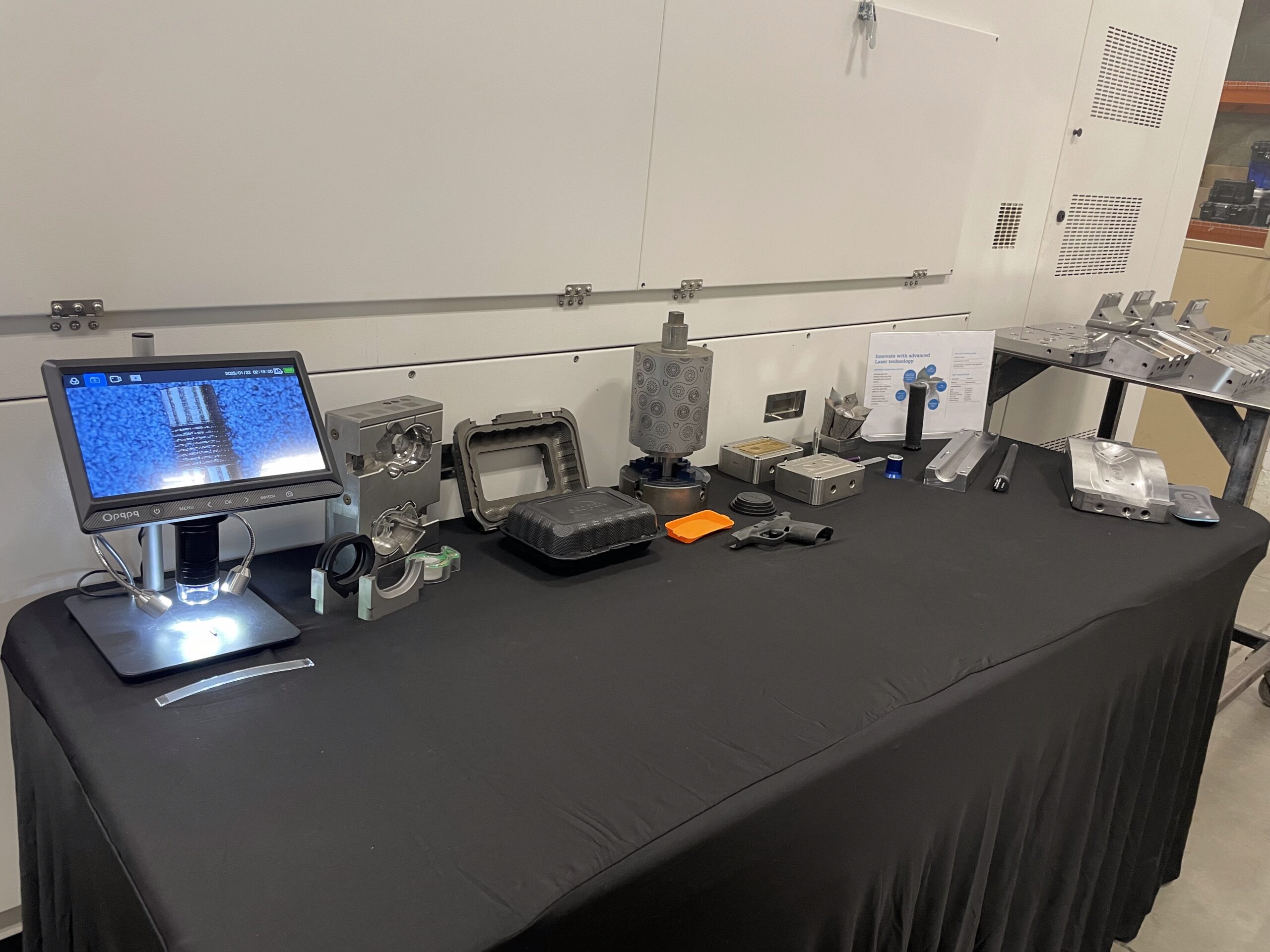
Guided Shop Tours: Guests walked through our state-of-the-art laser engraving and surface texturing facilities. Our team showcased precision workflows, from digital file preparation to final inspection, demonstrating how our solutions deliver both artistry and accuracy.

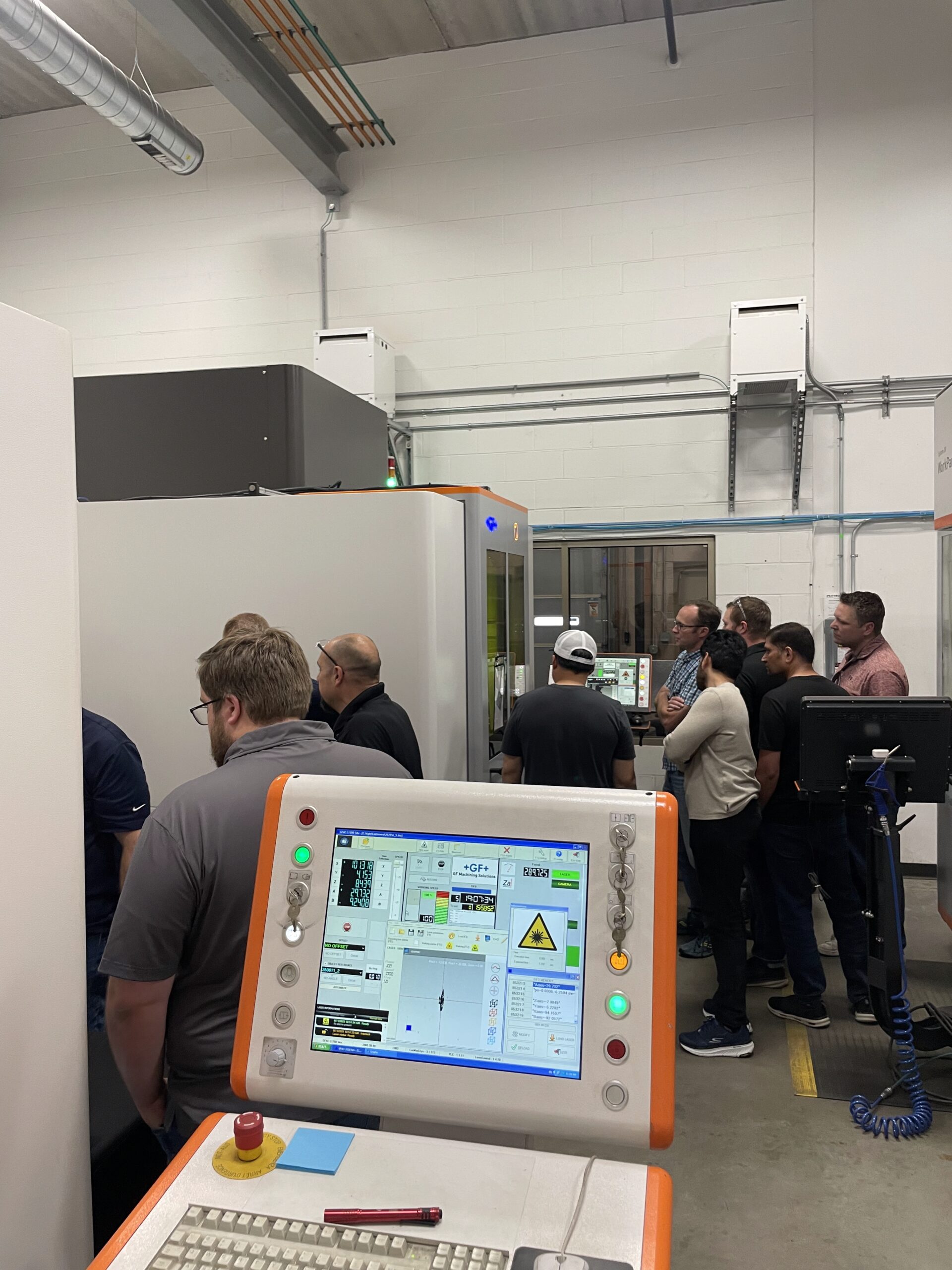
Live Demonstrations: Attendees witnessed live laser engraving in action—transforming metal samples and industrial components right before their eyes. We showcased various materials and finishes, highlighting our adaptability across industrial, commercial, and biomedical applications.

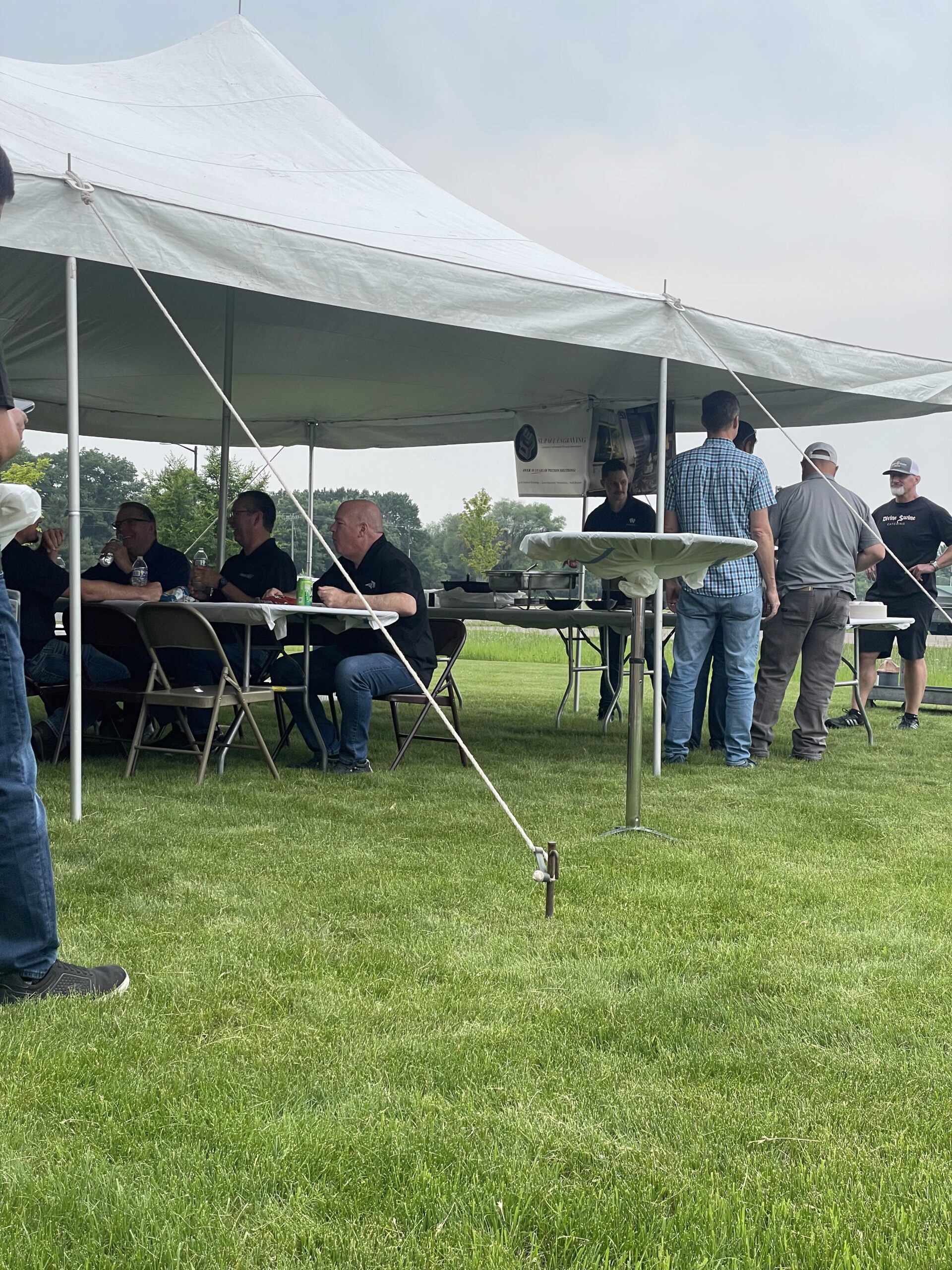
Networking & Refreshments: The event provided an enjoyable atmosphere for industry connections. Over refreshments, guests exchanged insights and explored opportunities to collaborate using our cutting-edge technology.

Thank You!

We’d like to extend a huge shoutout to everyone who joined us. Your presence and thoughtful questions were invaluable. Whether you came to see the machinery up-close or to explore how our advanced solutions might benefit your projects, you helped commemorate our half-century milestone in style.

Miss the Event? Let's Connect!

If you couldn’t attend but are still interested—or if you’d like a more tailored walkthrough—we’d be delighted to meet with you personally. Contact us:

We’re happy to schedule a time that works around your commitments and to answer any questions you may have about our services, processes, and technology.

As we celebrate 50 years of precision artistry and engineering excellence, none of it would be possible without your confidence in us. Here’s to the next 50 years—and beyond!

Why Choose Us?

Industry-Leading Precision: State-of-the-art laser texturing technology & advancements that set our customers apart & unlock design freedom like never before.

Design Versatility: 5 axis laser texturing is a fully digital process allowing designers the freedom to take bold, innovative strides to help lead their industries to unmarked territories. 

Commitment to Innovative Technology: As part of our promise to our customer’s we deliver on unmatched customer service, quality & turn-around times. We do this through continuously investing in the latest technology & advancements. 

Schedule your private tour today, and let us show you firsthand why generations of clients depend on our precision engraving and texturing services. Your next innovation starts here!

Celebrating 50 Years, Shop Open House

St. Paul Engraving Celebrates 50 Years of Innovation with a Shop Open House

St. Paul Engraving is proud to announce a landmark celebration—our 50th Anniversary Open House, taking place on Tuesday, June 11th, from 10:00 AM to 3:00 PM at our facility. This commemorative event will honor five decades of craftsmanship, technological advancement, and valued partnerships within the die and mold industry.

We invite customers, partners, industry professionals, and community members to join us for an engaging and informative day featuring:

 >> Guided Shop Tours: Explore our precision-focused operations and experience fisthand the rigorous standards that have defined our reputation.

 >>Technology Showcase: Discover the cutting-edge equipment and laser texturing innovations that continue to keep St. Paul Engraving at the forefront of mold and tooling solutions.

 >> Networking Over Food & Beverages: Connect with our team and other industry professionals while enjoying refreshments. 

This milestone event not only commemorates our legacy but also looks forward to the future of precision engraving and mold texturing.

Reserve Your Spot Today

To help us prepare a seamless experience for all guests, we kindly ask that you RSVP in advance.

We look forward to celebrating this special occasion with you and continuing to build strong, innovative partnerships for the next 50 years.

Modern Mold Texturing

Modern Mold Texturing: How St. Paul Engraving Sets Industry Standards

As the manufacturing world accelerates toward smarter, more efficient processes, we strive to continue to set the pace in mold texturing innovation. With a commitment to precision, innovation, and unmatched quality, St. Paul Engraving is not just keeping up with industry standards—we’re setting them.

Leading with Laser Precision

At the core of our operation is state-of-the-art laser texturing technology, enabling us to deliver complex, high-resolution surface finishes with exceptional accuracy. From fine-grain textures to deeply contoured surfaces, our laser systems offer repeatable results that eliminate the variability of traditional methods.

By replacing older acid etching techniques with environmentally responsible laser processes, we’re helping our partners achieve greater design freedom, faster lead times, and superior part-to-part consistency—all while meeting the rigorous demands of today’s global manufacturing markets.

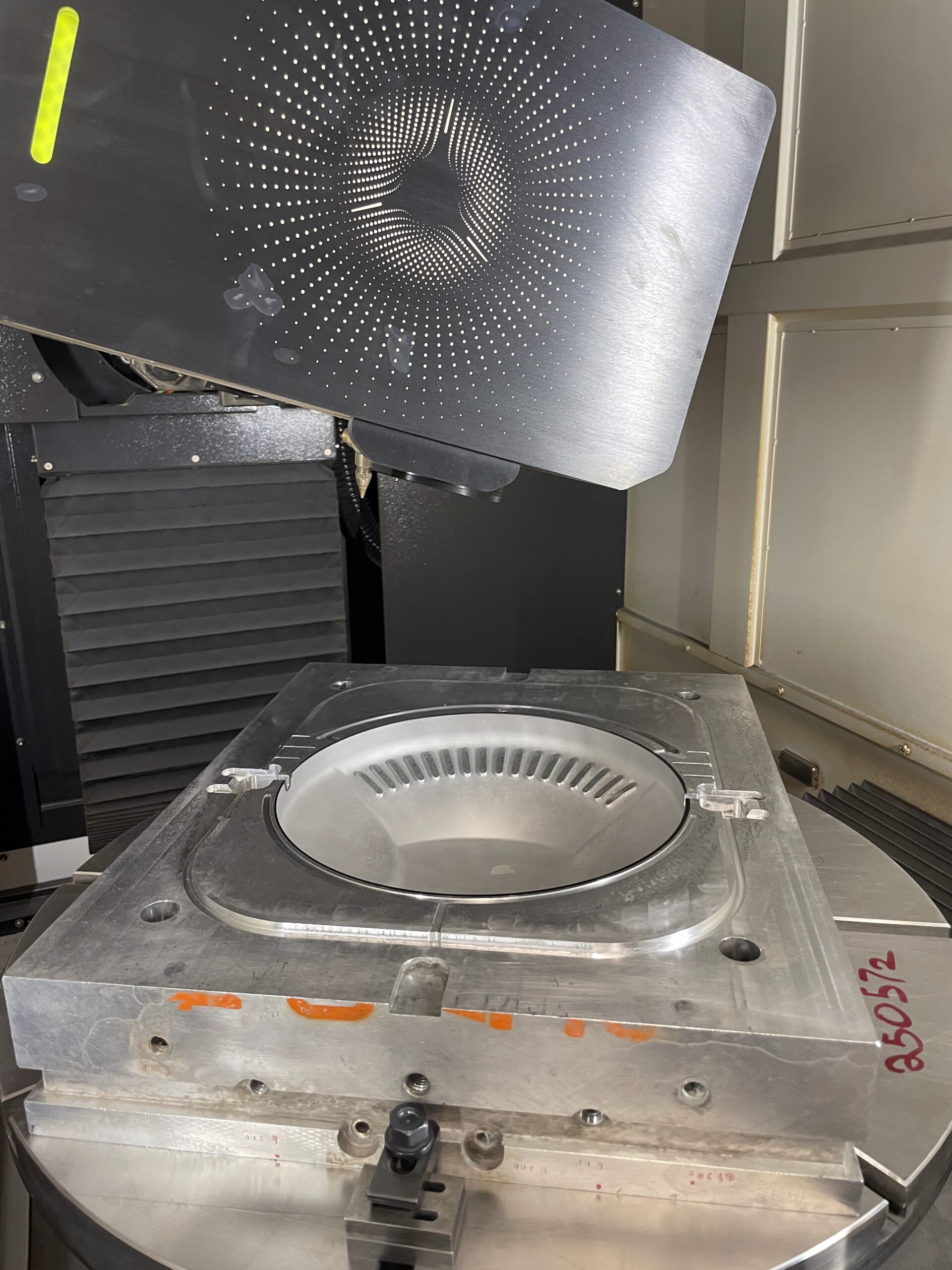
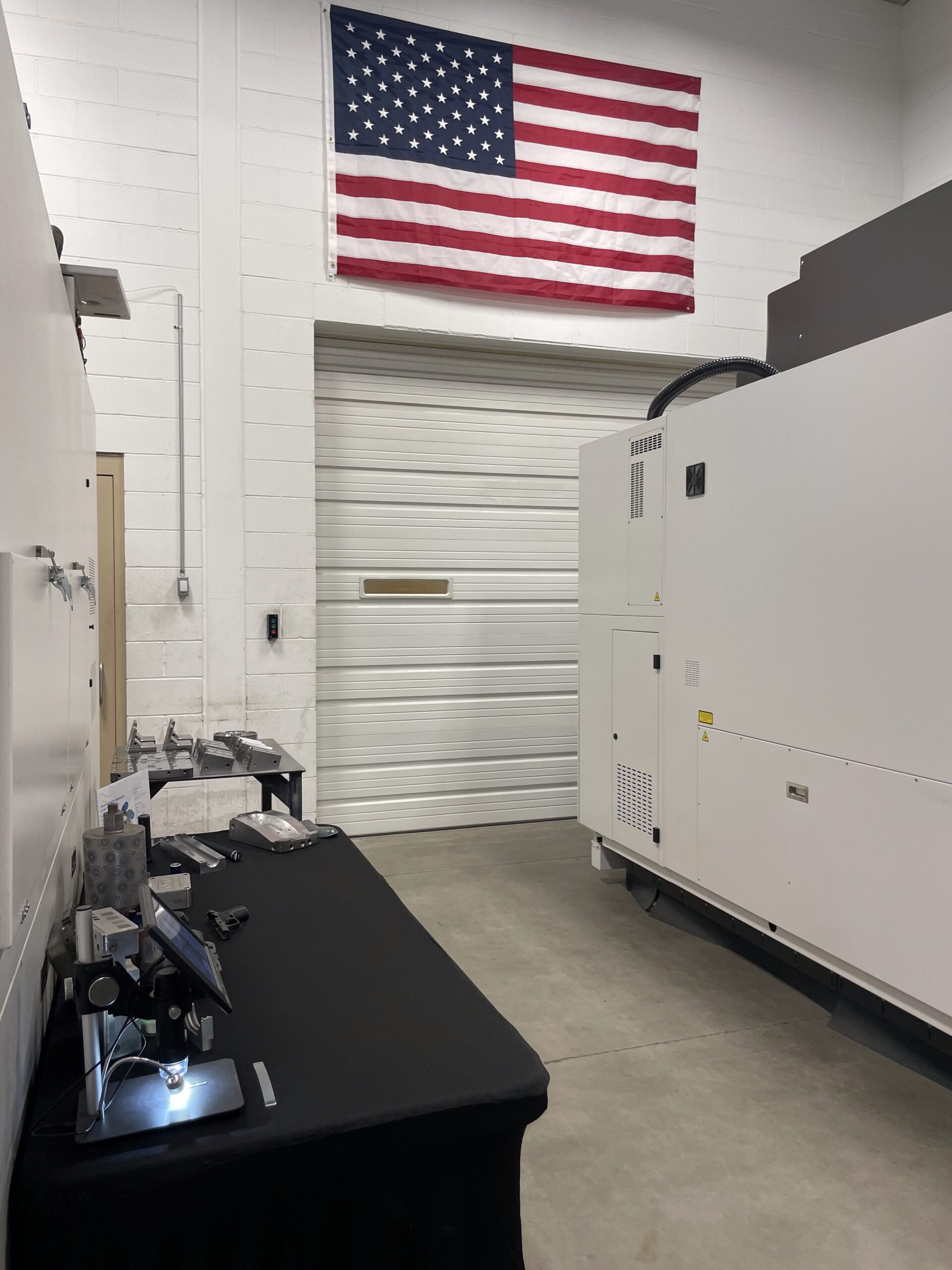
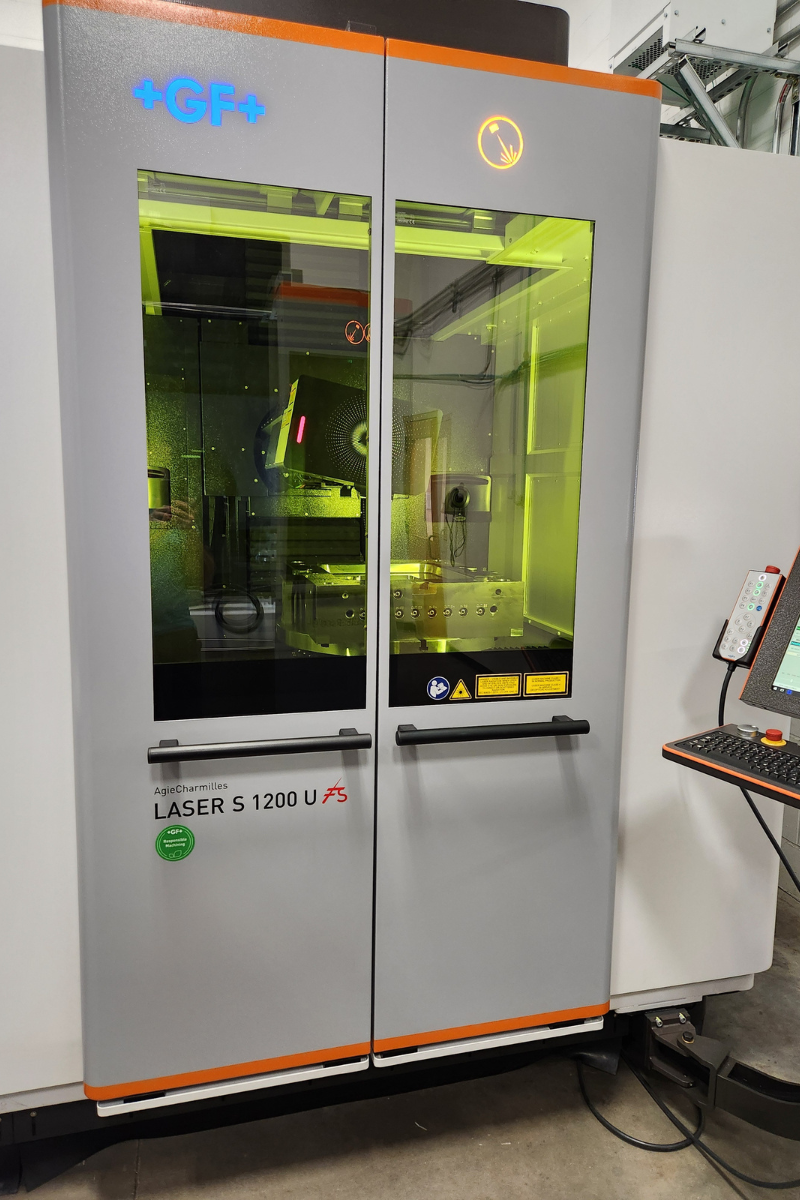
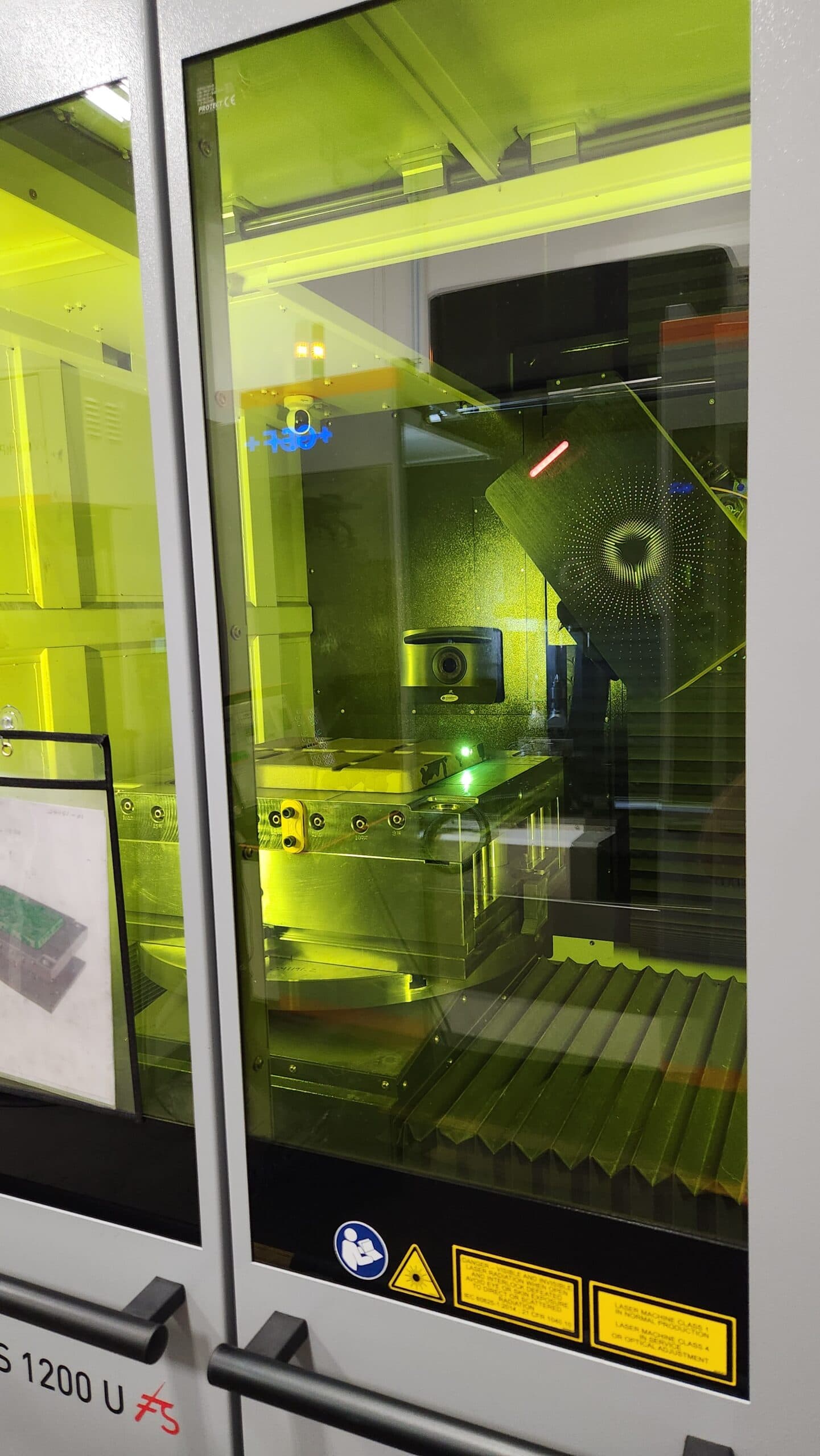
Laser S Series 1200 U with FS laser texturing system at St. Paul Engraving

Laser S 1200 FS

The Laser S Series 1200 U w/ FS capabilities, redefining precision, efficiency, and quality in the plastic injection molding industry.

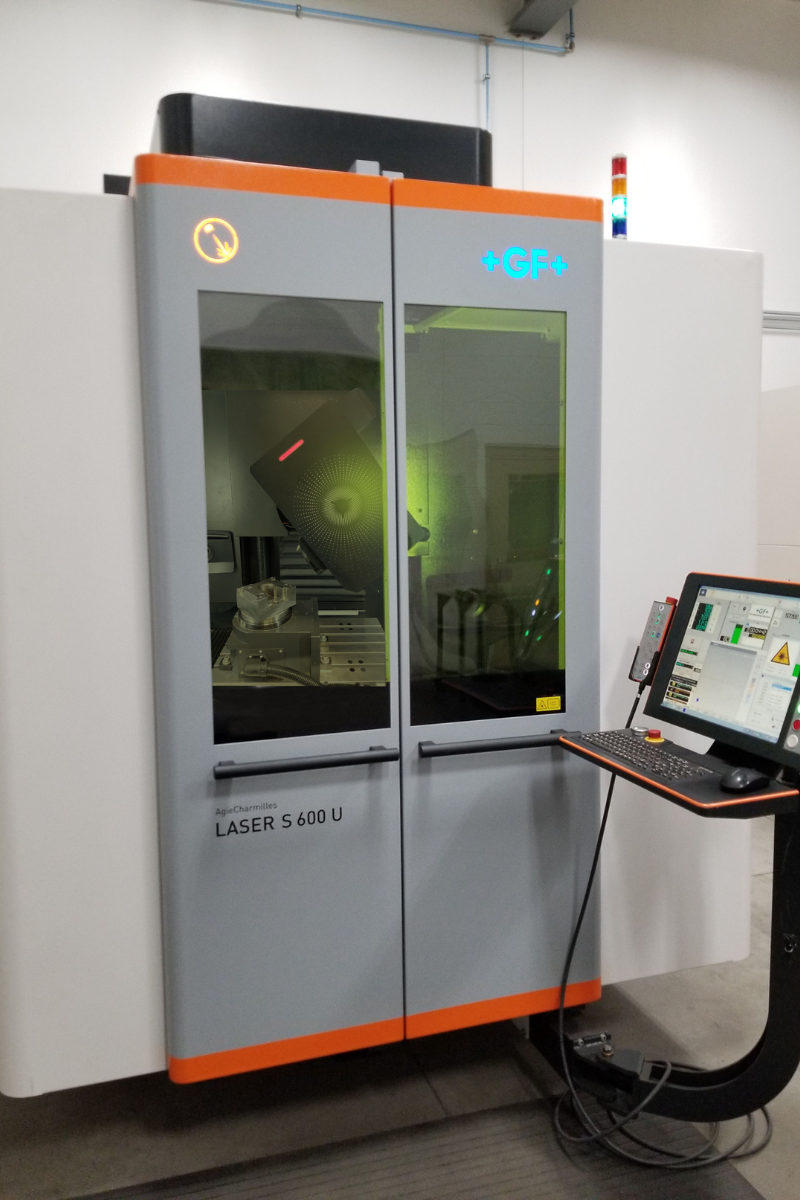
Laser S 600

Laser S 600 series, introduced in 2020, delivers exceptional agility, quality, and efficiency, operating 24/7 with a Z focus shifter and dual flexi-pulse sources.

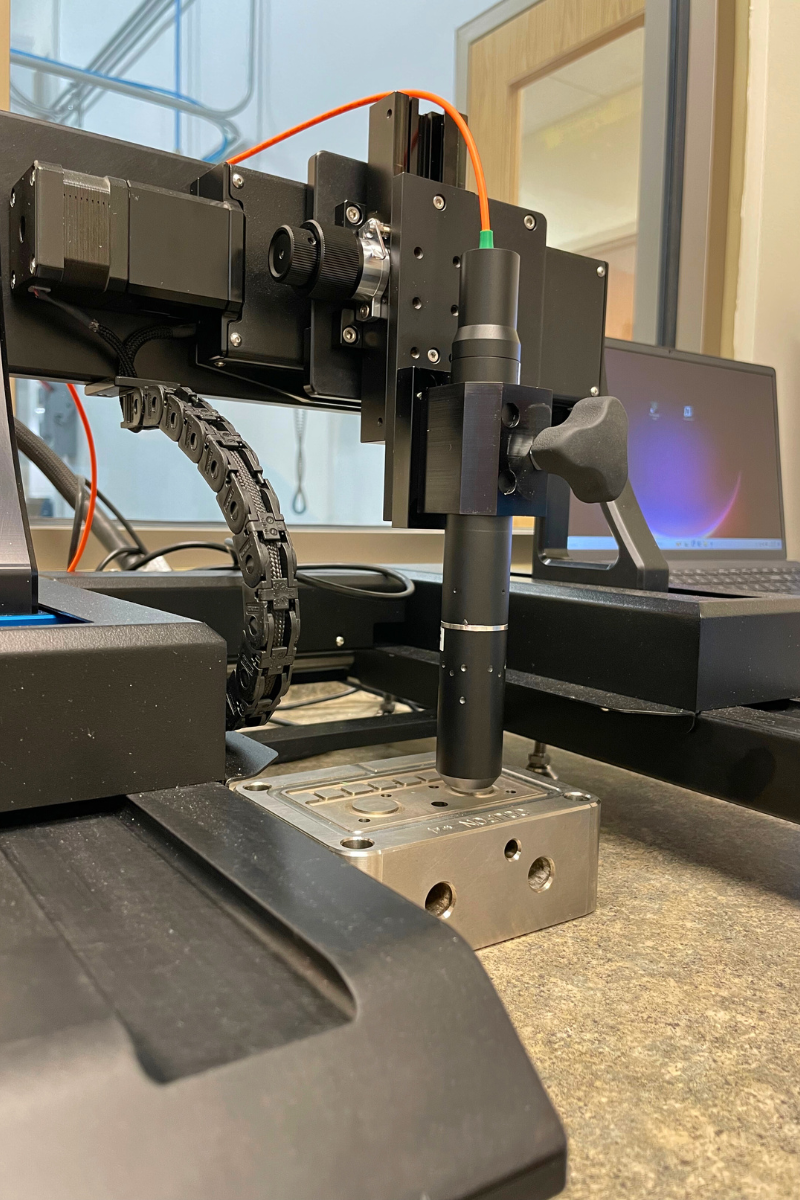
JR100 | Profilometer

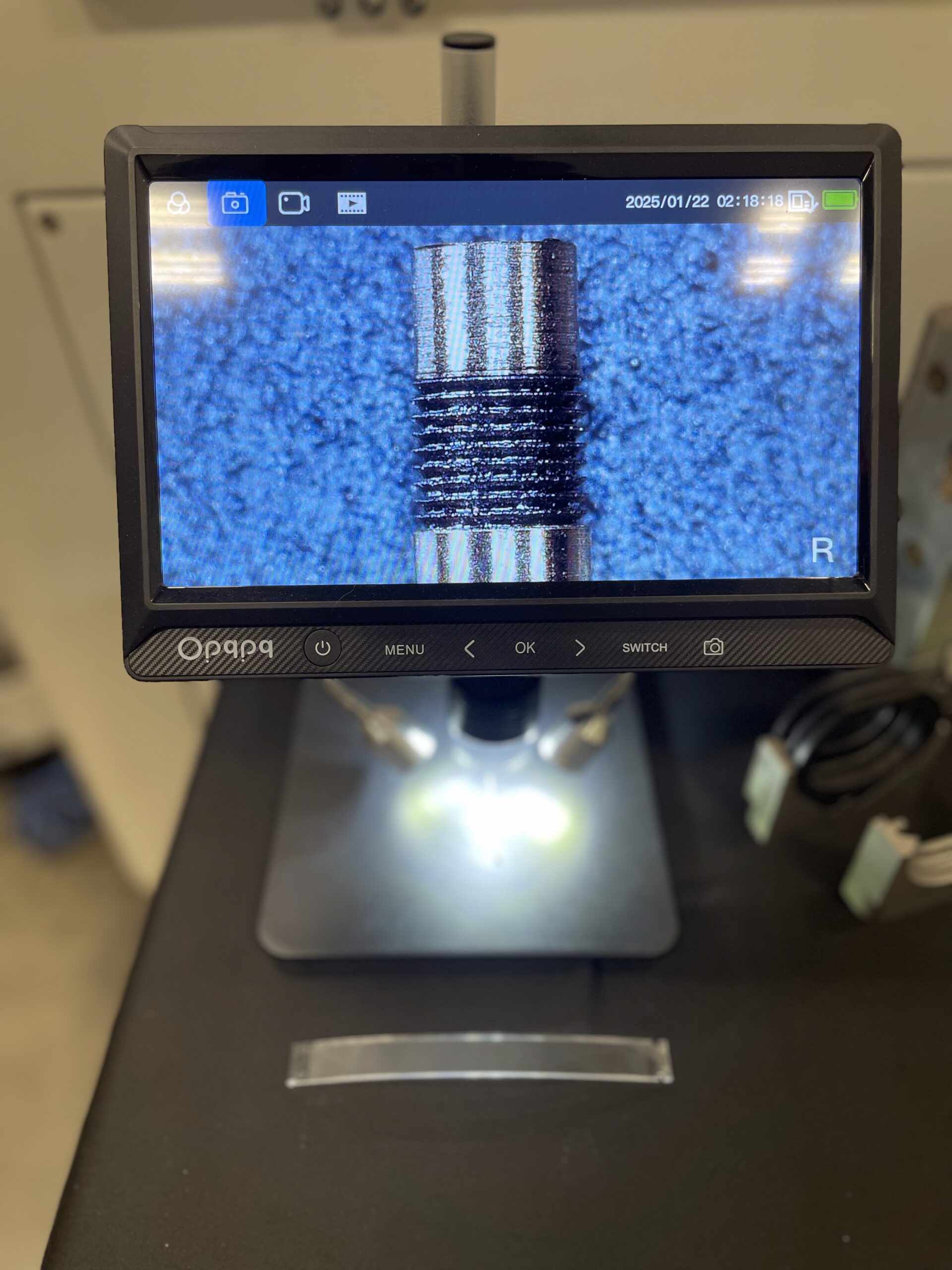
The JR100 Profilometer allows us to closely examine surface finishes, ensuring precise and consistent results.

Automation for Efficiency & Scale

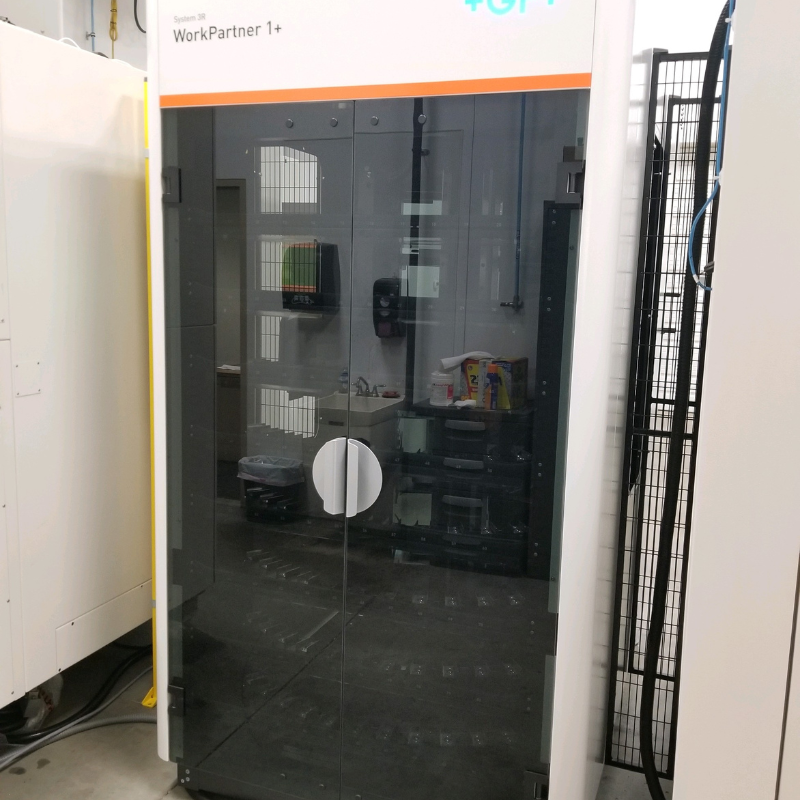
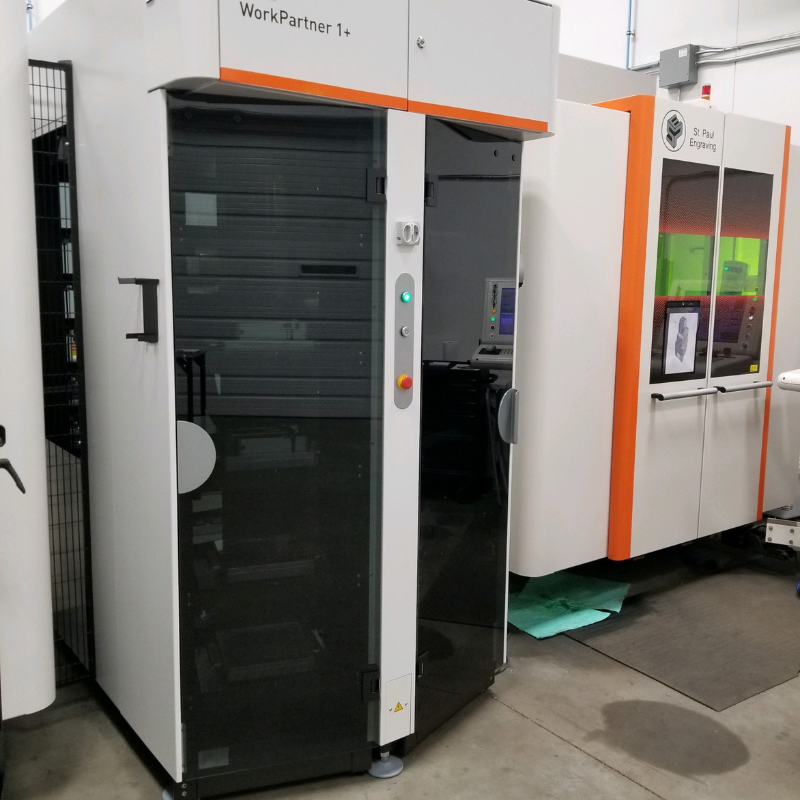
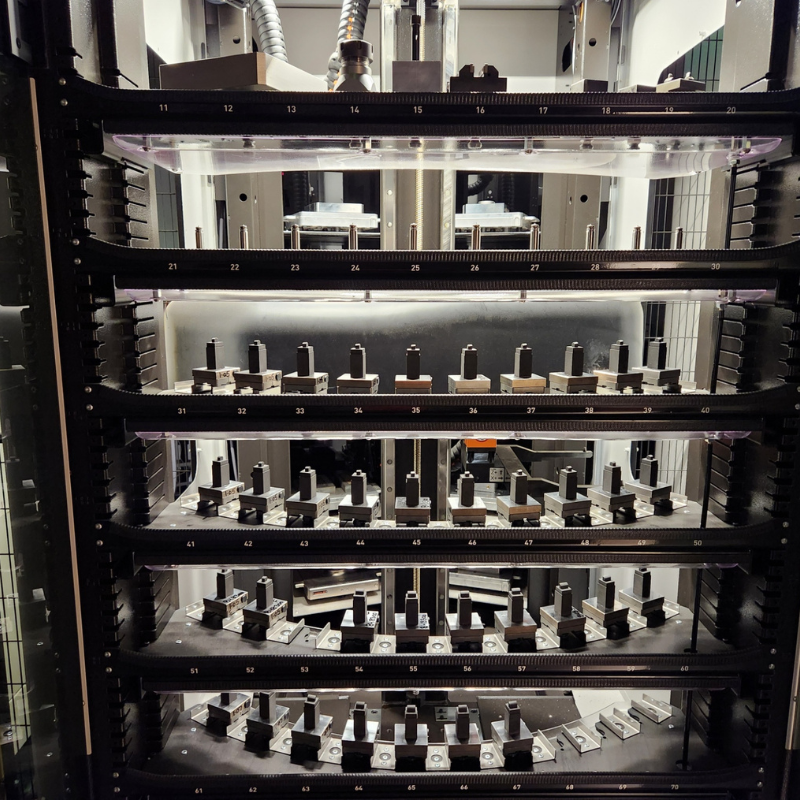
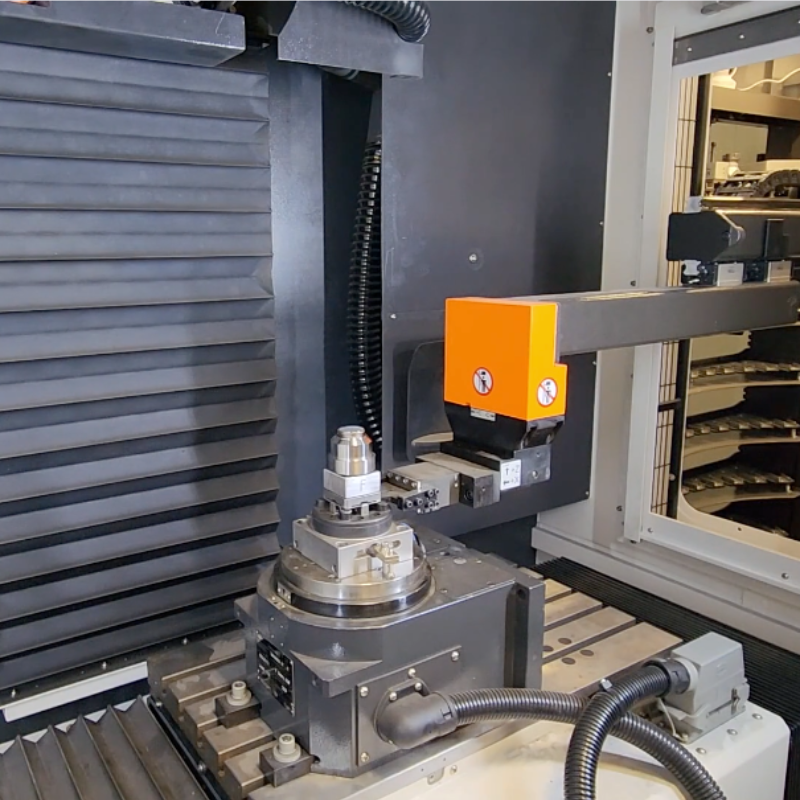
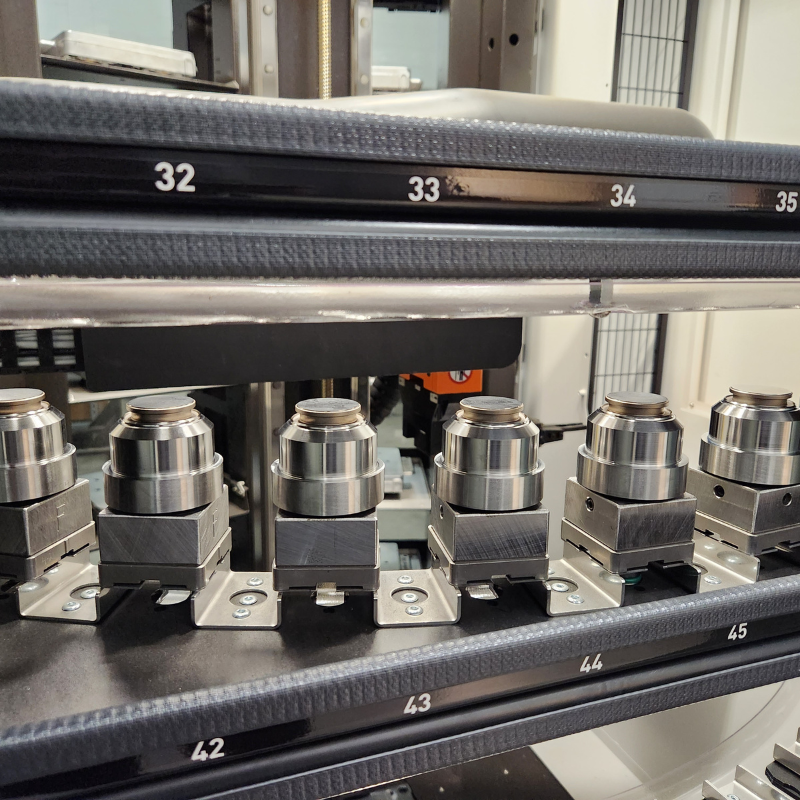
Our investment in automation and process integration has elevated our throughput and responsiveness, enabling us to handle everything from single cavity tools to high-volume production projects. Robotic part handling with 3R Automation, CAD-to-laser workflow automation, and real-time monitoring systems allow us to operate with efficiency and accuracy—regardless of project complexity.

This means less downtime, fewer manual steps, and faster delivery, allowing our clients to remain competitive in a rapidly evolving manufacturing environment.

Piece-Part Precision & Customization

Whether it’s a full tool or an individual components, our piece-part capabilities empower us to handle jobs of all shapes and sizes with extreme detail. This flexibility is especially valuable for high volume production, mold repairs, design revisions, or pilot projects that demand the same level of care as a full-scale production run.

Quality Control Without Compromise

Our reputation has been built on precision and trust, supported by a robust in-house quality control protocol. Every project undergoes detailed inspection using advanced profilometer equipment and visual validation processes to ensure conformity to exact client specifications.

We understand the cost of rework—and we’re committed to delivering results right the first time.

Experience It for Yourself

As we continue to pioneer the future of surface texturing & engraving, we’re excited to share what’s next. This spring, we’re preparing to host an exclusive Shop Open House event at our facility in early June. Attendees will experience live demonstrations of our laser texturing capabilities, tour our production floor, and connect with the experts who make it all happen.

The event will conclude with a casual networking hour—featuring food, drinks, and conversation among industry peers.

Stay tuned on our social channels for the official date announcement—and don’t miss the opportunity to see how SPE is shaping the future of surface texturing.

The Future of Laser Texturing

St. Paul Engraving Explores the Future of Laser Texturing with GF Machining Solutions

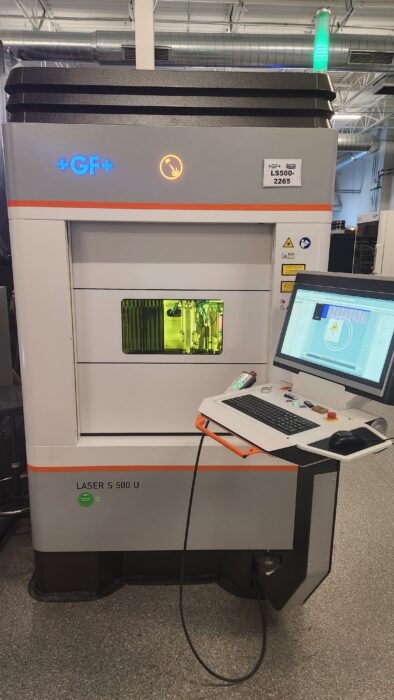
At St. Paul Engraving, we are dedicated to staying at the forefront of precision laser texturing technology. Last week, our team traveled to Chicago to experience one of the most advanced laser micromachining solutions available today—the Laser S 500 U by GF Machining Solutions. This visit provided an exclusive opportunity to trial this state-of-the-art technology firsthand and assess its potential to enhance our capabilities.

Why the Laser S 500 U Stands Out
The Laser S 500 U represents the latest evolution in precision surface texturing, offering unparalleled accuracy, repeatability, and efficiency. During our visit, we explored the system’s unique capabilities, including:

✔️ 5-Axis Precision for Complex Geometries

The Laser S 500 U allows for multi-directional laser processing, enabling seamless texturing on intricate 3D surfaces with unmatched precision. This capability is essential for industries requiring highly detailed and repeatable surface finishes.

✔️ High-Speed Laser Micromachining

With advanced scanning technology and optimized beam delivery, this system delivers exceptionally fine details at rapid speeds, reducing processing times while maintaining superior quality.

✔️ Thermal Impact Control for Superior Surface Quality

The system minimizes heat-affected zones, ensuring consistent results with minimal material distortion—a critical factor in achieving high-quality, high-precision textures.

✔️ Automation & Workflow Efficiency

Designed for seamless integration into high-volume production, the Laser S 500 U offers advanced automation features that help streamline workflows, reduce downtime, and optimize productivity.

What’s Next for St. Paul Engraving?

Our experience in Chicago reinforced the importance of adopting cutting-edge solutions to meet the evolving needs of our customers. As we continue to evaluate advancements in laser technology, we are actively exploring solutions that will enhance our precision engraving and texturing capabilities.

While we aren’t making any official announcements just yet, our team remains focused on investing in next-generation technology that aligns with our commitment to delivering the highest-quality results for our customers.

Stay Connected

At St. Paul Engraving, we are always looking ahead to the future of precision manufacturing. Stay tuned for more updates as we continue to expand our capabilities and bring the latest innovations to our customers.

🔗 Learn more about the Laser S 500 U here: GF Machining Solutions

For more updates on our latest technology and innovations, be sure to follow our News section or connect with us on LinkedIn.

Revolutionizing Firearm Manufacturing

Revolutionizing Firearm Manufacturing with Advanced Laser Texturing and Engraving

At St. Paul Engraving, we’re redefining what’s possible in firearm manufacturing with advanced laser texturing and engraving technologies. Precision and innovation are key in this competitive industry, and our solutions are engineered to meet these demands head-on.

By utilizing cutting-edge technologies we provide firearm manufacturers with new opportunities for enhanced design, shorter production timelines, and unmatched quality.

5 Axis Laser Technology, Including Femtosecond Capabilities: Unmatched Precision

This ultra-short pulse technology delivers:

> Sharper geometries and intricate details: Perfect for branding marks, optical patterns, and functional grip textures.

> Minimizing thermal impact: Ensures cleaner cuts without warping or damage to sensitive components.

This technology allows us to customize aesthetically pleasing & function efficient textures for our customers, unlocking innovative design solutions not achievable with traditional techniques.

Z Focus Shifter: Faster, More Efficient Machining

Our Z focus shifter, paired with high-speed 3D scanning, can reduce machining times by up to 40%, optimizing production efficiency. Key features include:

> Dynamic beam adjustment: The laser matches the mold’s contour without moving the machine axis.

> Streamlined production: Fewer machine positions and larger patch sizes result in faster machine time and short lead times.

This technology ensures firearm manufacturers can meet tight deadlines without compromising precision.

Flexi-Pulse Sources: Redefining Surface Quality

With the ability to adjust pulse durations (4-200 nanoseconds), Flexi-Pulse technology provides:

> Flawless surface finishes: Minimizes burr, recast, and microfractures for clean, functional designs.

> Unparalleled versatility: Ideal for engraving deep cavities or intricate mold designs in firearm components.

Paired with ability to switch between multiple sources optimizing for detailed engravings or large-scale texturing—all while maintaining exceptional quality.

Why Choose St. Paul Engraving?

Connecting craftsmanship through innovation, we combine advanced technologies with expertise to deliver clean, precise, and repeatable results tailored to the firearm industry. Whether you’re designing the next iconic firearm or streamlining production, we provide:

>> Enhanced durability and aesthetics for grips, slides, and other components.

>> Intricate branding opportunities with sharp, detailed engravings.

>> Faster turnaround times for increased efficiency.

Contact us today to learn how St. Paul Engraving can revolutionize your firearm manufacturing process.

Large Mold Texturing w/ Latest Laser S 1200 Technology

St. Paul Engraving Pioneers Large Mold Texturing with Latest Laser S 1200 Technology

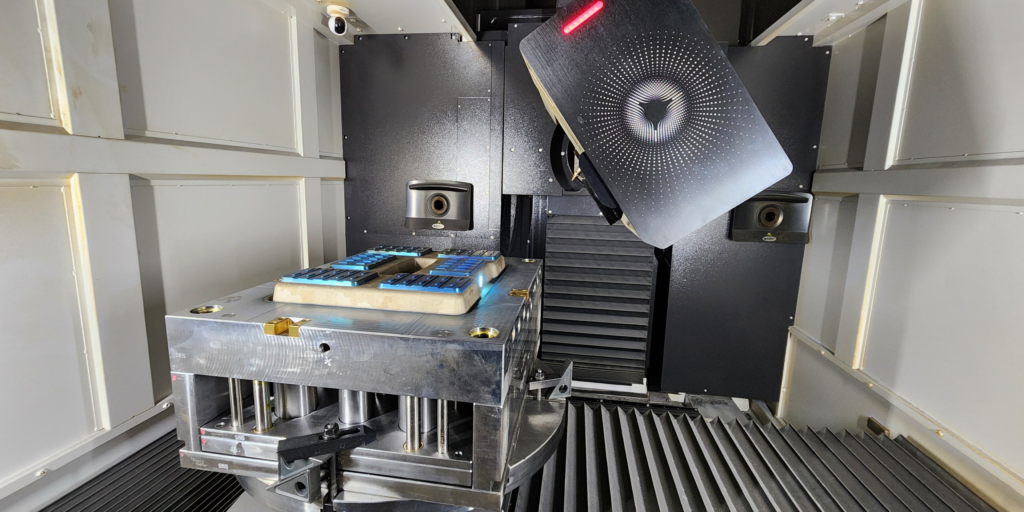
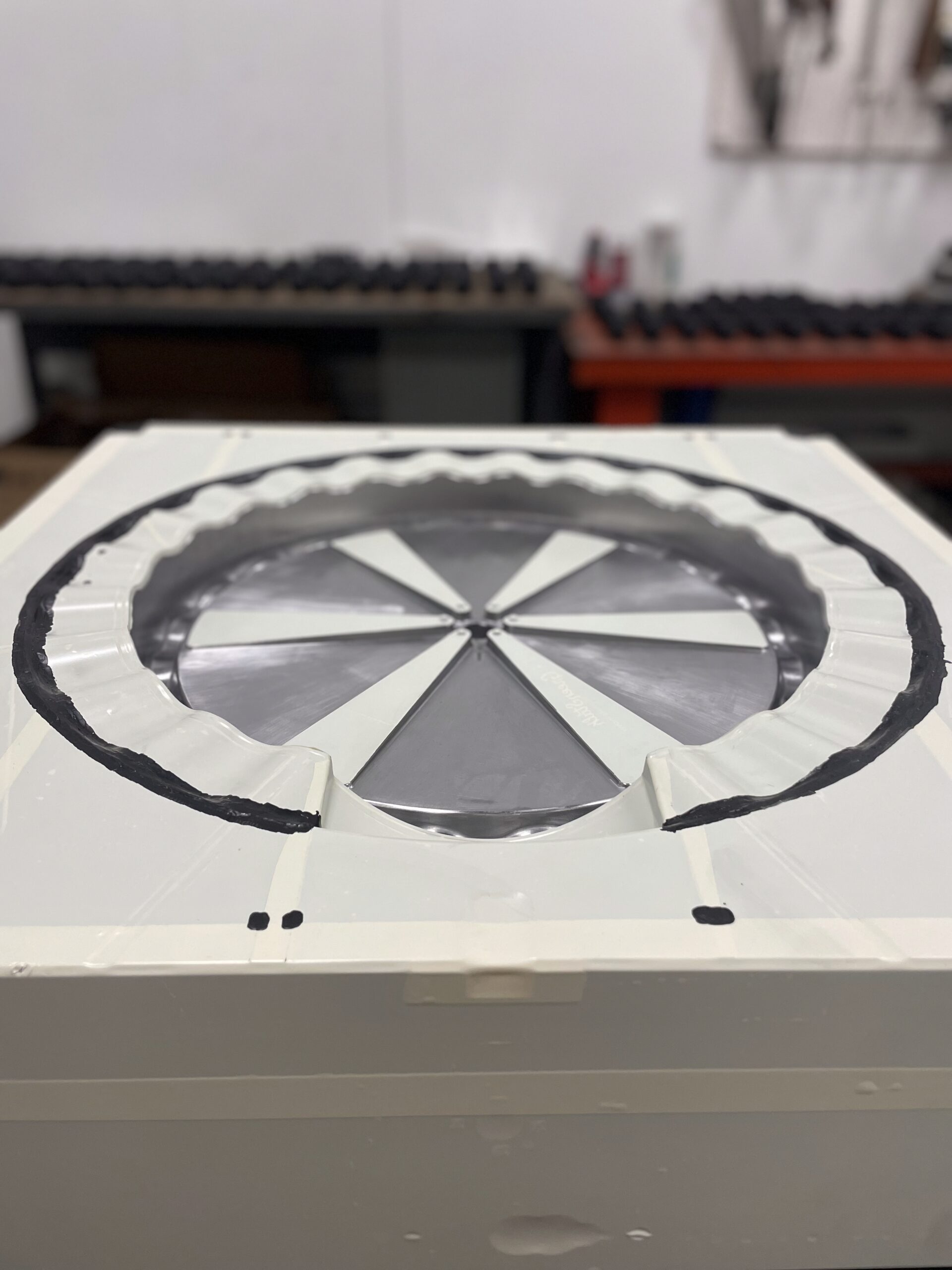
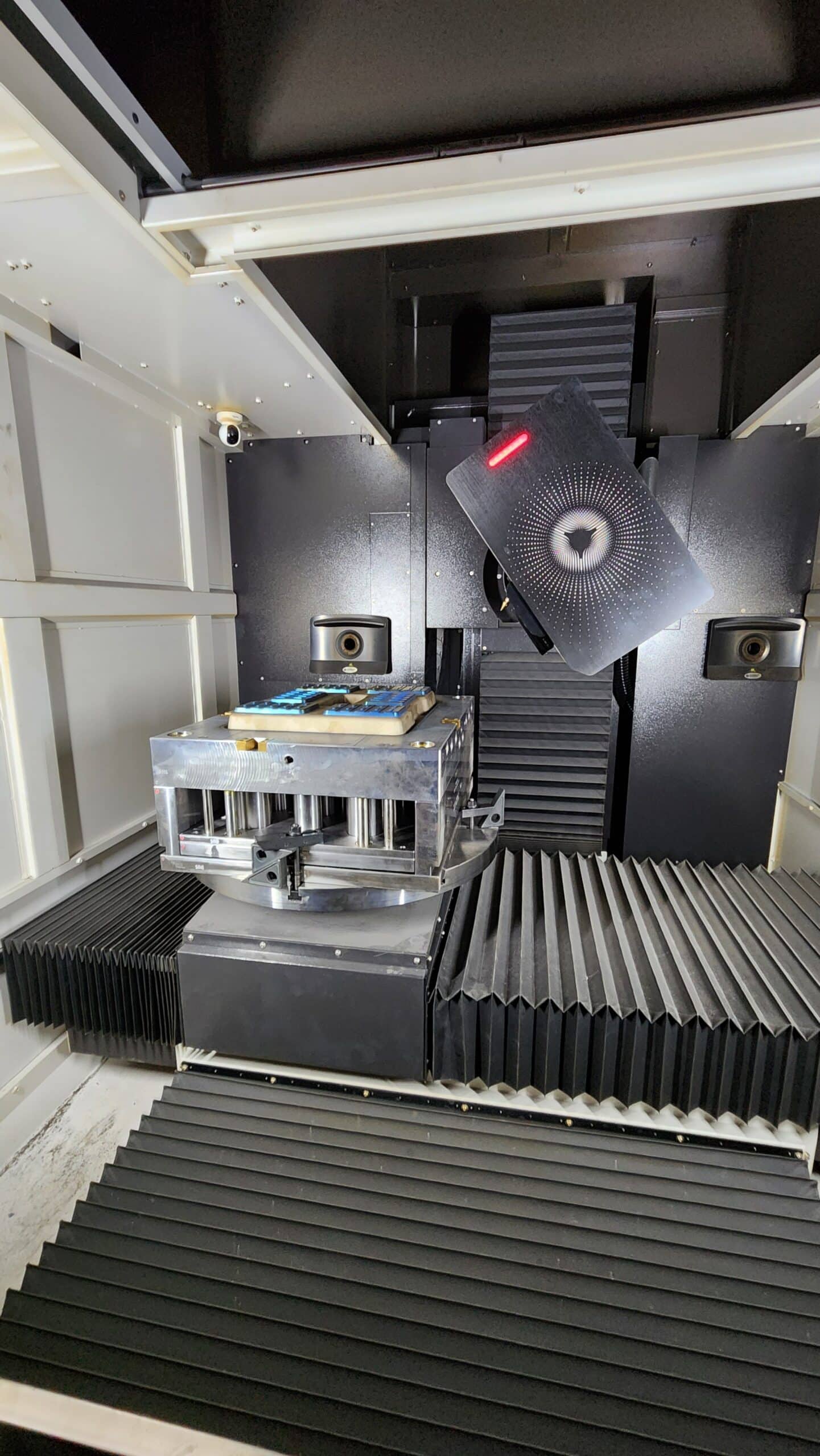
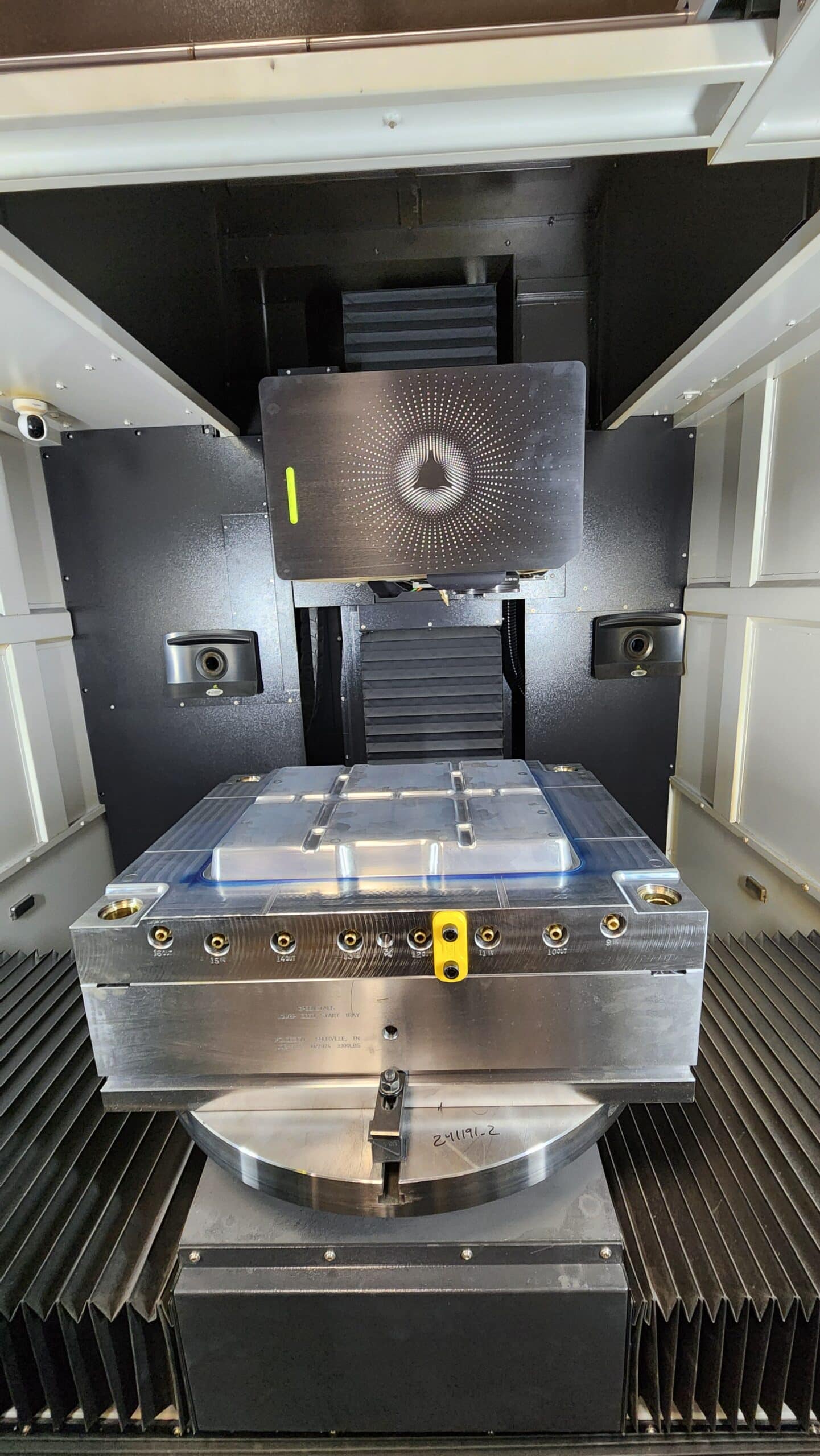
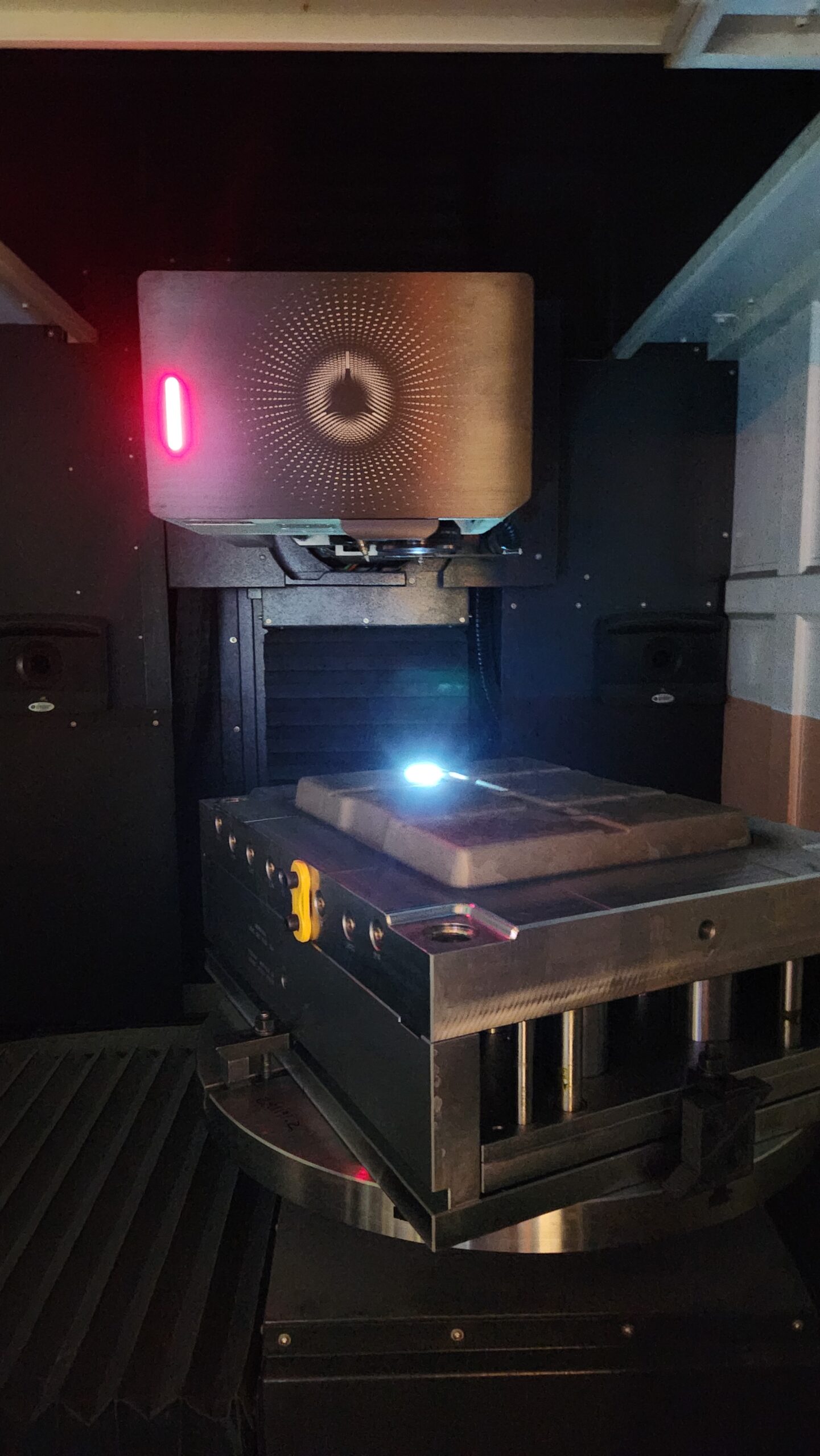
St. Paul Engraving has recently completed a texturing project of a partially assembled mold, demonstrating the precision and adaptability of our latest technology – the Laser S 1200. This achievement not only highlights our ability to meet unique manufacturing challenges but also underscores our commitment to providing customers with unmatched quality, service, and turnaround times.

Innovative Approach: Texturing a Partially Assembled Mold

The project involved applying intricate surface textures to a mold that was partially assembled—a challenge requiring advanced laser technology and meticulous planning. Leveraging the Laser S 1200, our team executed this task with exceptional precision, achieving seamless texturing across the mold’s complex geometry.

The Laser S 1200 is designed for versatility and precision, enabling the application of detailed textures even on large molds and assembled components. By utilizing this technology, we delivered flawless results that exceeded client expectations, showcasing the potential of laser texturing to redefine what’s possible in mold manufacturing.

Benefits of the Laser S 1200 for Surface Texturing

St. Paul Engraving’s Laser S 1200 offers a host of benefits that make it a game-changer for manufacturers:

Enhanced Precision
The Laser S 1200’s high-resolution capabilities ensure consistent, repeatable textures across intricate surfaces, even on large-scale or partially assembled molds.

Versatile Application
This technology can seamlessly texture molds with complex shapes, allowing manufacturers to achieve desired surface finishes without compromising structural integrity.

Reduced Lead Times
The efficiency of the Laser S 1200 allows for faster project completion, aligning with tight production schedules and reducing downtime for manufacturers.

Superior Quality
By eliminating manual processes and ensuring uniform results, laser texturing elevates the final product’s quality, meeting the most demanding industry standards.

Commitment to Excellence and Innovation

At St. Paul Engraving, we understand that our customers rely on us not only for our expertise but also for our unwavering commitment to excellence. Our investment in the Laser S 1200 represents our dedication to staying at the forefront of industry advancements. By integrating state-of-the-art technology with decades of experience, we deliver results that set new benchmarks for quality, precision, and efficiency.

Partner with us as an Industry Leader

As leaders in laser texturing and engraving, we pride ourselves on offering solutions tailored to our customers’ unique needs. Whether it’s overcoming the challenges of large mold texturing or delivering on ambitious project timelines, our team ensures every detail is executed with precision and professionalism.

If you’re looking for a partner who combines the latest technology with a commitment to superior service, St. Paul Engraving is your trusted choice.

Contact us today to learn more about our laser texturing services and how the Laser S 1200 can transform your manufacturing processes. 

“Moon Phases”: Laser Texturing Meets Fine Arts

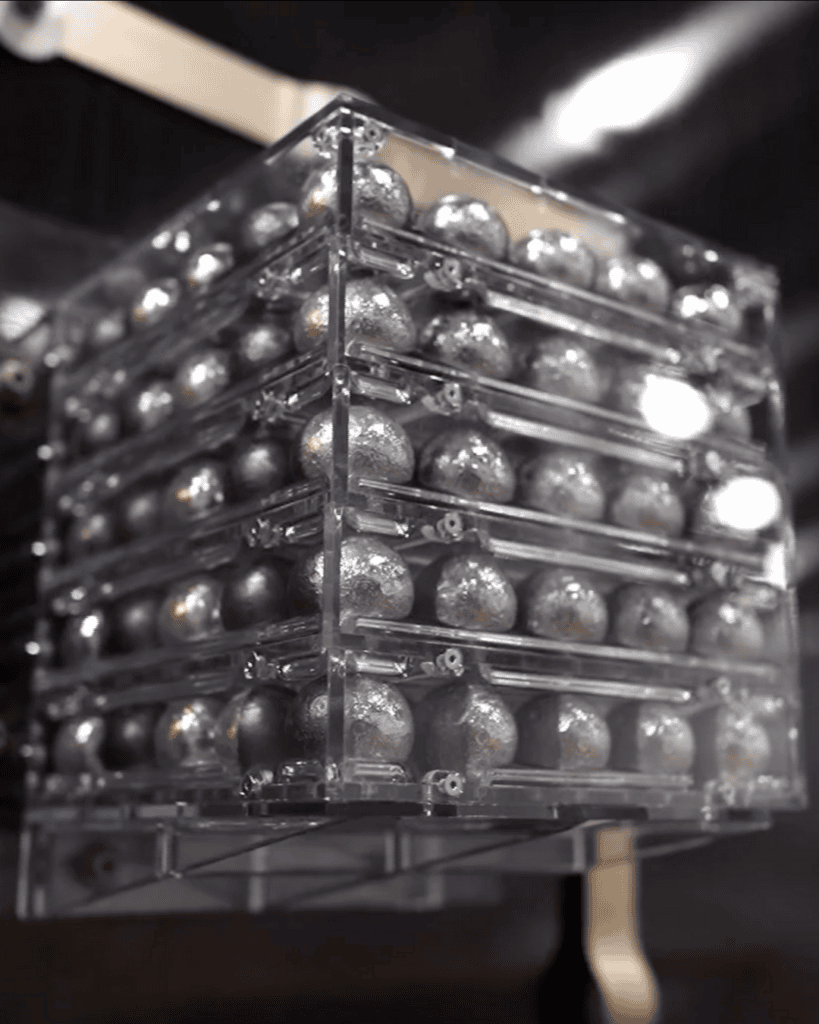
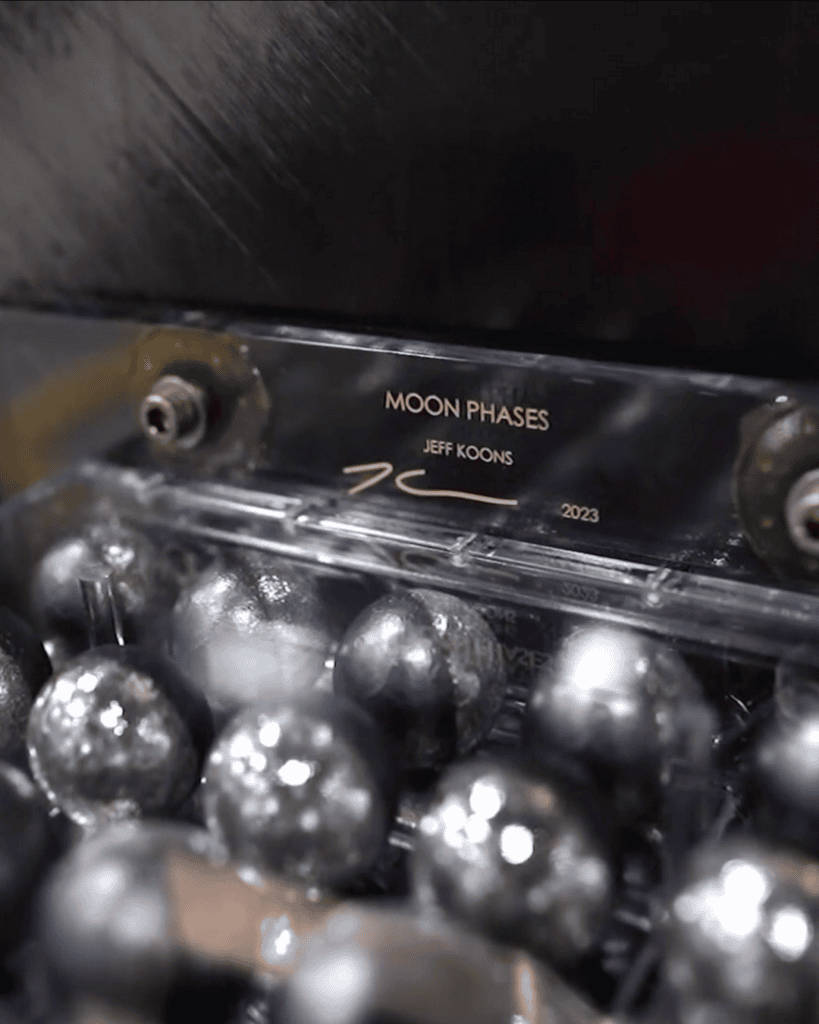
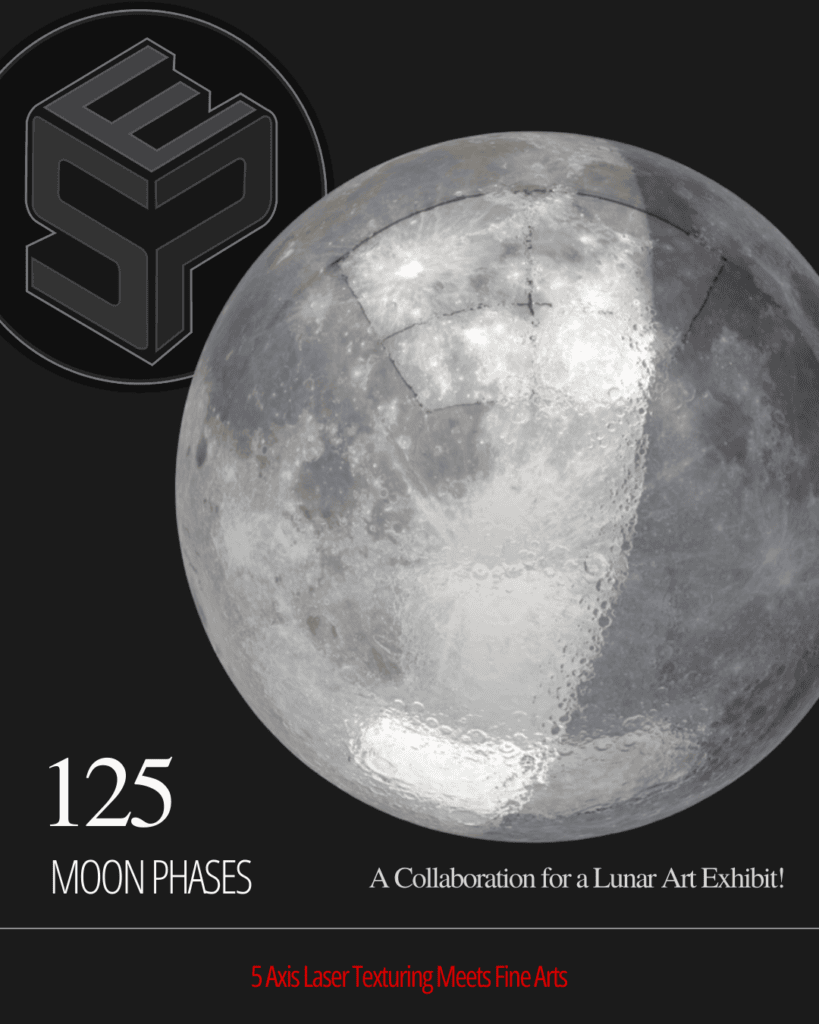
St. Paul Engraving is proud to unveil our latest collaborative masterpiece with a world-renowned artist: the “Moon Phases” project. This unique exhibit features 125 meticulously crafted moon phases, showcasing the perfect blend of art and technology.

Unifying Art and Technology

The “Moon Phases” project presented an exciting challenge: to capture the intricate details of each lunar phase with the highest degree of accuracy. The artist’s vision required not only artistic sensitivity but also cutting-edge technology to achieve the desired level of detail and texture. This is where St. Paul Engraving’s expertise and advanced laser texturing capabilities came into play.

The Role of 5-Axis Laser Technology

To bring the “Moon Phases” project to life, we utilized our latest 5-axis laser technology. Our state-of-the-art equipment allowed us to execute complex, multi-dimensional texturing and engraving with unparalleled precision. The 5-axis laser’s ability to maneuver and texture surfaces at various angles was crucial in accurately replicating the subtle nuances of each moon phase.

Precision and Accuracy

Every phase of the moon, from the new moon to the full moon, was meticulously engraved to meet the exacting standards of the artist. Our team worked tirelessly to ensure that each piece reflected the delicate interplay of light and shadow characteristic of the lunar surface. The precision of our laser technology enabled us to achieve a level of detail that would have been impossible with traditional methods.

Meeting Deadlines 

One significant challenge of the “Moon Phases” project was the deadline for the lunar launch. Thanks to the efficiency and advanced capabilities of our 5-axis laser technology, we were able to complete the project on time without compromising on quality.

A Unified Commitment to Excellence

The collaboration between this world-renowned artist and St. Paul Engraving underscores a unified commitment to excellence in both art and engineering. It is a partnership that highlights the importance of precision, innovation, and the relentless pursuit of perfection. We are honored to have played a role in bringing this visionary project to fruition and proud to showcase the capabilities of our advanced laser texturing technology.

We were notified that the “Moon Phases” safely landed on the moon on Thursday, February 22nd. This marks the first lunar art exhibit in the history of mankind. St. Paul Engraving is humbled to have been a part of making art and history together with this esteemed artist.